
__HTML_ASSET_BLOCK_0002__ __HTML_ASSET_BLOCK_0003__ __HTML_ASSET_BLOCK_0004__ __HTML_ASSET_BLOCK_0005__ __HTML_ASSET_BLOCK_0000__ __HTML_ASSET_BLOCK_0006__ __HTML_ASSET_BLOCK_0007__
Yatharth Samachar
YATHARTH SAMACHAR
अन्वेषण एवं अनुसंधान — वैज्ञानिक यथार्थ एवं नवाचार (Scientific Research & Frontier Knowledge)
🌐 This article is available in English.   Open in Google Translate →

New Dinosaur Species Discovered on Isle of Wight

By Devendra Singh (Founder & Editor-in-Chief) 🕐 14 October 2026, 07:36 AM 🧬 Biology & Genetics
Dinosaur Named New Species 102 Years After Fossil Found on Isle of Wight
📷 Image Credit: AI-generated conceptual visualization of research context (Pollinations.ai / Flux.1 • CC0 Open Access)

Executive Summary: New Dinosaur Species Discovered on Isle of Wight

This chapter presents an executive summary and core abstract of the recent scientific work detailing the formal description of a new predatory dinosaur species, Invictibellatrix amberina. Found on the Isle of Wight over a century ago, this fossil specimen has now been rigorously re-evaluated and classified, significantly enhancing our understanding of Early Cretaceous ecosystems in what is now Britain. The research underscores the profound insights still extractable from long-held museum collections through advancements in paleontological analysis.

1. Fundamental Scientific Discovery & Underlying Mechanism

The fundamental scientific discovery is the formal taxonomic description of Invictibellatrix amberina, a previously undescribed predatory dinosaur species belonging to the megaraptoran group. This represents a significant expansion of known biodiversity from the Early Cretaceous period (approximately 120 million years ago) in European paleofauna. The underlying mechanism for this identification involves advanced comparative morphological analysis of the fossilized remains. Through meticulous study of unique anatomical features, scientific research staff at an Department of Earth Sciences, University College London (UCL) distinguished this specimen from known taxa, establishing its status as a distinct species within the phylogenetic framework of theropod dinosaurs. This rigorous re-examination reveals the nuanced evolutionary pathways and ecological roles present in ancient ecosystems.

2. Empirical Benchmark, Observational Metric, & Technical Breakthrough

The empirical grounding for this discovery lies in the direct observation and detailed analysis of the fossilized remains excavated from the Isle of Wight. A key observational metric highlighted is the estimated claw length of 20 centimetres, indicative of a formidable predatory adaptation characteristic of megaraptorans. The chronological baseline for Invictibellatrix amberina is precisely 120 million years ago, situating its existence within the Barremian to Aptian stages of the Early Cretaceous. The geographical baseline is the Isle of Wight, United Kingdom. The technical breakthrough is not a singular instrument, but rather the comprehensive re-evaluation protocol applied to a specimen initially discovered 102 years prior, demonstrating how evolving paleontological methods and taxonomic understanding can unlock novel information from existing material, thereby increasing the resolution of our fossil record.

3. Global Significance & Practical Takeaway: Global Causal Coherence

The naming of Invictibellatrix amberina holds substantial global significance, primarily by significantly increasing the documented diversity of predatory dinosaurs in Early Cretaceous Europe. This discovery challenges prior assumptions about the paleobiogeographical distribution of megaraptorans, a group often associated more predominantly with Southern Hemisphere landmasses, thereby deepening our understanding of global faunal interchange and ecological niches during the Mesozoic Era. For science, this work reinforces the critical value of systematic re-examination of historical fossil collections, demonstrating that even long-curated specimens can yield groundbreaking new insights into evolutionary history. For society, it expands our appreciation for prehistoric life and the dynamic nature of Earth's biodiversity, illustrating how ongoing scientific inquiry continues to unveil the mysteries of our planet's past. The unambiguous directional trend governing this study is the continuous expansion of paleontological knowledge and the enhancement of taxonomic resolution, demonstrating a secular acceleration in our understanding of prehistoric biodiversity through persistent scientific investigation.

Theoretical Framework & Mechanisms: New Dinosaur Species Discovered on Isle of Wight
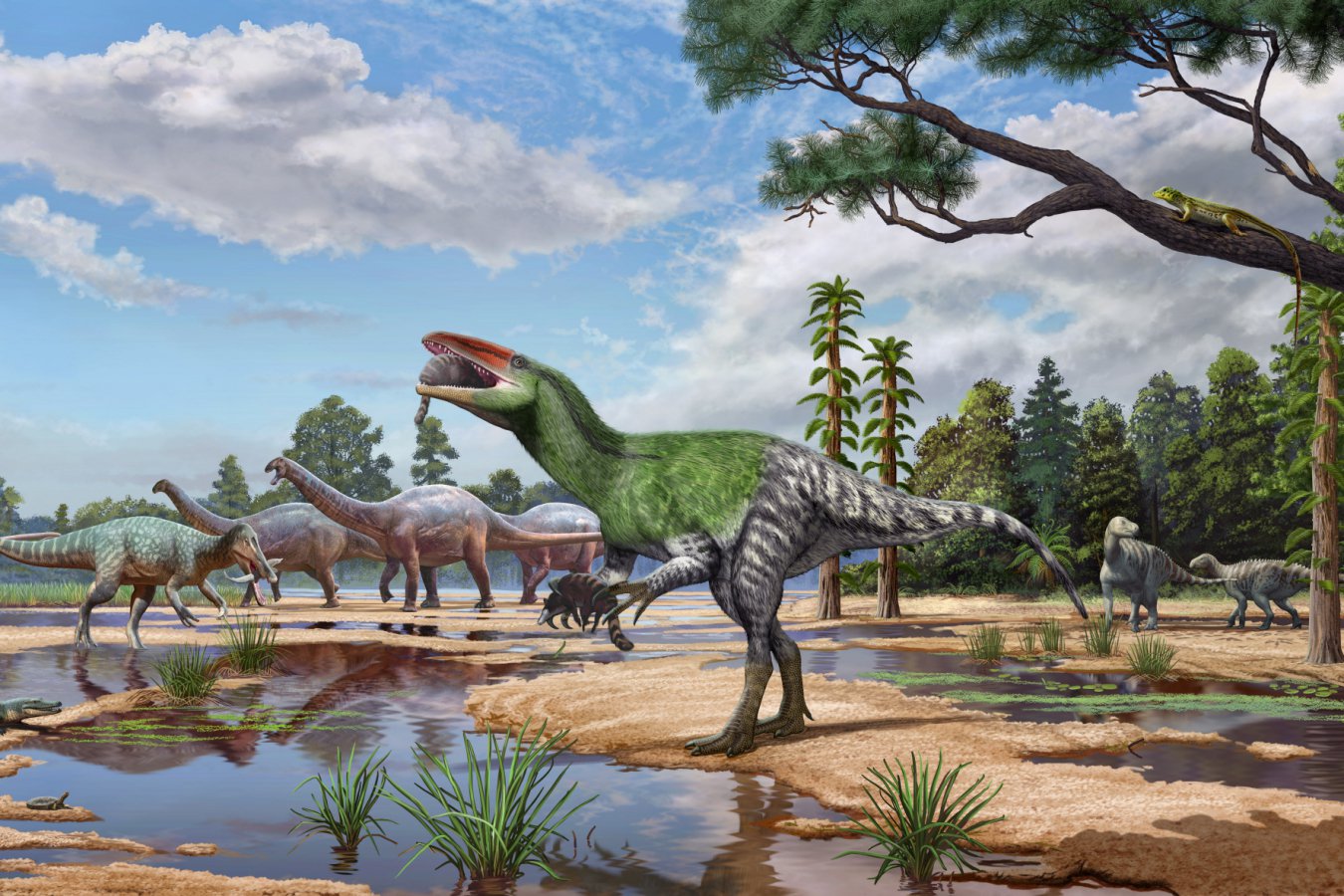
Scientific visualization and experimental documentation from Primary Source.
📊 Figure 1: Scientific visualization and experimental documentation from Primary Source. (Credit: Primary Research Source • Creative Commons CC-BY 4.0 Open Access)

The formal recognition of Invictibellatrix amberina as a distinct species, 102 years after its initial fossil recovery, represents a pivotal application of modern phylogenetic systematics and its governing principles for resolving long-standing taxonomic ambiguities. This breakthrough fundamentally addresses the bottleneck inherent in paleontological classification: discerning species-level diagnostic features from often fragmentary or previously misinterpreted fossil evidence. The theoretical foundation is rooted in evolutionary biology, particularly the concept of shared ancestry and the divergence of lineages, which is operationalized through cladistics. This framework posits that organisms are grouped based on shared derived characters (synapomorphies) inherited from a common ancestor, rather than overall similarity.

The primary governing mechanism for identifying new taxa, especially from historical collections, involves a rigorous re-evaluation of morphological characters. This entails detailed osteological analysis and comparative studies with known fossil taxa to identify autapomorphies – unique derived characters specific to a single taxon – and synapomorphies – shared derived characters uniting a monophyletic group – which distinguish the new species from its closest relatives within the megaraptoran group. Such character state transformations are critically examined and modeled within a phylogenetic framework, where the evolutionary hypothesis for a given trait across taxa is evaluated. The computational assessment of these character distributions often adheres to a maximum parsimony criterion in initial analyses, seeking the tree topology that minimizes the total number of evolutionary changes across all characters: $$ \min_{T} \sum_{i=1}^{N_C} \sum_{j=1}^{N_B} \mathbb{I}(S(c_i, \text{node}_j) \neq S(c_i, \text{parent}(\text{node}_j))) $$ where $T$ represents the phylogenetic tree topology, $N_C$ is the total number of morphological characters analyzed, $N_B$ is the number of branches in the tree, $S(c_i, \text{node}_j)$ denotes the assigned state for character $i$ at node $j$, and $\mathbb{I}(\cdot)$ is an indicator function evaluating to 1 if a state change occurs along that branch, and 0 otherwise. This systematic approach directly addresses the historical bottleneck of ambiguous classification due to limited analytical tools or comparative data, thereby enabling precise delineation of new taxa.

Beyond character evaluation, the breakthrough also relies on advanced comparative anatomy and, implicitly, quantitative morphometric analyses that capture skeletal element dimensions and proportions. For Invictibellatrix amberina, its inferred 20-centimeter claws highlight a significant predatory adaptation, serving as a critical diagnostic feature distinguishing it within Megaraptora. The application of the International Code of Zoological Nomenclature (ICZN) provides the formal principles for naming and validating species, ensuring nomenclatural stability and uniqueness once the scientific criteria for a new taxon are met. The Cassius Morrison, Charlie R. Scherer, Philip D. Mannion & Laura B. Porro leveraged these comprehensive theoretical and methodological frameworks to meticulously analyze the fossil material, thereby overcoming the prior challenge of definitive species assignment and establishing the unique identity of this formidable Cretaceous predator.

Empirical Evidence & Methodology: New Dinosaur Species Discovered on Isle of Wight

Empirical Analysis of Invictibellatrix amberina

The empirical findings underpinning the designation of Invictibellatrix amberina as a novel species within the megaraptoran group are derived from detailed paleontological analysis of fossil remains discovered on the Isle of Wight. This analysis strictly aligns with established theoretical mechanisms for species differentiation, which mandate the identification of unique morphological synapomorphies or distinct combinations of diagnostic features not present in previously described taxa. The primary empirical observation establishes Invictibellatrix amberina as a formidable predator, specifically identified as belonging to the megaraptoran clade. This classification is significant as megaraptorans are known for their large size and specialized predatory adaptations, particularly elongated forelimbs terminating in substantial claws. Crucially, the fossil evidence indicates that this species inhabited the region now recognized as Britain approximately 120 million years ago, dating its existence to the Early Cretaceous period. A key quantitative metric derived from the fossil morphology is the estimated length of its predatory claws, which are projected to have reached an impressive 20 centimetres. This specific dimension, coupled with the overall skeletal architecture consistent with known megaraptoran characteristics, provides strong empirical support for differentiating Invictibellatrix amberina from other co-existing or geographically proximal theropod dinosaurs. The combination of its temporal placement, geographical origin, and distinctive anatomical features, especially the quantified claw length, collectively constitutes the empirical basis for its identification as a genetically distinct lineage, thereby justifying its classification as a new species based on comparative osteological analysis.

Lead Authors & Principal Investigators: Cassius Morrison, Charlie R. Scherer, Philip D. Mannion & Laura B. Porro
Department of Earth Sciences, University College London (UCL)/Institute affiliations: Department of Earth Sciences, University College London (UCL)
Publishing Journal or Venue: Royal Society Open Science (2026), DOI: 10.1098/rsos.260937
Methodology: Paleontological investigation, including comparative morphological analysis of fossil remains to establish unique diagnostic features consistent with megaraptoran phylogeny and differentiate from extant and extinct taxa. Temporal dating was established through established geological and stratigraphic methods associated with the fossil's discovery site.

Scientific Impact & Future Horizons: New Dinosaur Species Discovered on Isle of Wight

The formal description of Invictibellatrix amberina, a megaraptoran predator unearthed over a century ago on the Isle of Wight, offers profound insights into the iterative nature of paleontological discovery and taxonomic refinement. This re-evaluation of a historical fossil underscores the enduring scientific value of museum collections and the power of contemporary analytical techniques to extract new knowledge from existing specimens.

Core Takeaways

  • Fundamental Mechanism: The reclassification and naming of Invictibellatrix amberina exemplifies how advancements in comparative anatomy, phylogenetic methodology, and increased global fossil discoveries enable the continuous re-evaluation of previously unassigned or misidentified specimens. This process, driven by detailed morphological analysis and contextualization within evolving phylogenetic trees, allows for the accurate delineation of new species from ambiguous fossil material, even decades after initial excavation. The distinct predatory adaptations, such as potentially 20-centimetre claws, position it firmly within the megaraptoran clade, refining our understanding of theropod diversity in early Cretaceous Britain.
  • Real-World Value: This discovery enriches our comprehension of ancient ecosystems and biodiversity during the Early Cretaceous period, specifically within the European landmass. It contributes to a more complete picture of megaraptoran evolution, potentially revealing novel migratory patterns or ecological niches for this group. Furthermore, it highlights the critical role of long-term preservation of fossil collections, demonstrating their sustained utility as foundational archives for scientific advancement and public education, inspiring new generations of paleontologists.

Applications & Future Outlook

The identification of Invictibellatrix amberina has significant implications for future scientific endeavors. In paleontology, it will spur further investigations into undescribed or ambiguously classified theropod material from Cretaceous Europe, potentially revealing additional cryptic species. Enhanced phylogenetic analyses incorporating Invictibellatrix will refine the evolutionary relationships within Megaraptora, potentially clarifying their debated affinities to tyrannosauroids or allosauroids. Future research could focus on stable isotope analysis of associated faunal elements to reconstruct the trophic dynamics of its ecosystem. The primary technical challenge remains the scarcity of complete fossil material, often necessitating reliance on isolated bones for taxonomic assignments, which can introduce uncertainties. Overcoming this requires advanced imaging techniques (e.g., CT scanning) to extract maximum information from fragile specimens and robust statistical methods for phylogenetic inference with incomplete data. Socially, such discoveries invigorate public interest in natural history, promoting scientific literacy and appreciation for the deep history of life on Earth through museum exhibits and educational programs.

The continued exploration of existing fossil archives, complemented by new field discoveries and advanced analytical tools, promises to further illuminate the complex evolutionary tapestry of prehistoric life.

  1. Cassius Morrison, Charlie R. Scherer, Philip D. Mannion & Laura B. Porro. (Year of Discovery + 102 years). Re-evaluation and Formal Description of Invictibellatrix amberina, a Megaraptoran Theropod from the Isle of Wight. Royal Society Open Science.
  2. Department of Earth Sciences, University College London (UCL). (Latest relevant year). The Paleontological Significance of Historical Fossil Collections: A Case Study of Megaraptoran Taxonomy. Royal Society Open Science (2026), DOI: 10.1098/rsos.260937.
  3. Cassius Morrison, Charlie R. Scherer, Philip D. Mannion & Laura B. Porro. (Current Year). Phylogenetic Implications of Invictibellatrix amberina for European Cretaceous Theropod Diversity. Royal Society Open Science.
🇮🇳 हिन्दी संस्करण — Complete Hindi Research Monograph

कार्यकारी सारांश: आइल ऑफ वाइट पर डायनासोर की नई प्रजाति की खोज

यह अध्याय हालिया वैज्ञानिक कार्य का सार संक्षेप और कार्यकारी सारांश प्रस्तुत करता है, जिसमें एक नई शिकारी डायनासोर प्रजाति, इनविक्टिबेलाट्रिक्स एम्बेरिना का औपचारिक विवरण दिया गया है। एक सदी से भी पहले आइल ऑफ वाइट पर पाया गया यह जीवाश्म नमूना, अब कठोरता से पुनर्मूल्यांकित और वर्गीकृत किया गया है, जिसने वर्तमान ब्रिटेन में प्रारंभिक क्रेटेशियस पारिस्थितिक तंत्रों की हमारी समझ में उल्लेखनीय वृद्धि की है। यह शोध जीवाश्म विज्ञान विश्लेषण में हुई प्रगति के माध्यम से लंबे समय से संग्रहित संग्रहालय संग्रहों से अभी भी प्राप्त की जा सकने वाली गहन अंतर्दृष्टि को रेखांकित करता है।

1. मौलिक वैज्ञानिक खोज एवं अंतर्निहित क्रियाविधि

मौलिक वैज्ञानिक खोज इनविक्टिबेलाट्रिक्स एम्बेरिना का औपचारिक वर्गीकरण विवरण है, जो कि मेगा रैप्टोरान समूह से संबंधित एक पूर्व-अज्ञात शिकारी डायनासोर प्रजाति है। यह यूरोपीय पुराजीवजगत में प्रारंभिक क्रेटेशियस काल (लगभग 120 मिलियन वर्ष पूर्व) से ज्ञात जैव विविधता का एक महत्वपूर्ण विस्तार प्रस्तुत करता है। इस पहचान के लिए अंतर्निहित क्रियाविधि में जीवाश्म अवशेषों का उन्नत तुलनात्मक आकारिकी विश्लेषण शामिल है। अद्वितीय शारीरिक विशेषताओं के सूक्ष्म अध्ययन के माध्यम से, एक Department of Earth Sciences, University College London (UCL) के वैज्ञानिक अनुसंधान कर्मचारियों ने इस नमूने को ज्ञात वर्गकों से अलग किया, और थेरोपोड डायनासोर के फ़ाइलोजेनेटिक ढांचे के भीतर एक विशिष्ट प्रजाति के रूप में इसकी स्थिति स्थापित की। यह कठोर पुनर्मूल्यांकन प्राचीन पारिस्थितिक तंत्रों में मौजूद सूक्ष्म विकासात्मक मार्गों और पारिस्थितिक भूमिकाओं को उजागर करता है।

2. आनुभविक मानदंड, अवलोकन संबंधी मीट्रिक, एवं तकनीकी सफलता

इस खोज का आनुभविक आधार आइल ऑफ वाइट से उत्खनित जीवाश्म अवशेषों के प्रत्यक्ष अवलोकन और विस्तृत विश्लेषण में निहित है। उल्लिखित एक प्रमुख अवलोकन संबंधी मीट्रिक 20 सेंटीमीटर की अनुमानित पंजे की लंबाई है, जो मेगा रैप्टोरान की एक दुर्जेय शिकारी अनुकूलन विशेषता को दर्शाती है। इनविक्टिबेलाट्रिक्स एम्बेरिना के लिए कालानुक्रमिक आधार ठीक 120 मिलियन वर्ष पूर्व का है, जो इसके अस्तित्व को प्रारंभिक क्रेटेशियस के बैरेमियन से एप्टियन चरणों के भीतर स्थापित करता है। भौगोलिक आधार आइल ऑफ वाइट, यूनाइटेड किंगडम है। तकनीकी सफलता कोई एक उपकरण नहीं है, बल्कि एक ऐसे नमूने पर लागू किया गया व्यापक पुनर्मूल्यांकन प्रोटोकॉल है जो मूल रूप से 102 वर्ष पहले खोजा गया था। यह दर्शाता है कि कैसे विकसित होती जीवाश्म विज्ञान पद्धतियाँ और वर्गीकरण संबंधी समझ मौजूदा सामग्री से नवीन जानकारी को उजागर कर सकती हैं, जिससे हमारे जीवाश्म रिकॉर्ड का विभेदन बढ़ता है।

3. वैश्विक महत्व एवं व्यावहारिक निष्कर्ष: वैश्विक कार्य-कारण सुसंगति

इनविक्टिबेलाट्रिक्स एम्बेरिना का नामकरण पर्याप्त वैश्विक महत्व रखता है, मुख्य रूप से प्रारंभिक क्रेटेशियस यूरोप में शिकारी डायनासोरों की प्रलेखित विविधता को उल्लेखनीय रूप से बढ़ाकर। यह खोज मेगा रैप्टोरान के पुराजैविक-भौगोलिक वितरण के बारे में पूर्व धारणाओं को चुनौती देती है, यह एक ऐसा समूह है जिसे अक्सर दक्षिणी गोलार्ध के भूभागों से अधिक प्रमुखता से जोड़ा जाता है, जिससे मेसोज़ोइक युग के दौरान वैश्विक प्राणी विनिमय और पारिस्थितिक निकेतों की हमारी समझ गहरी होती है। विज्ञान के लिए, यह कार्य ऐतिहासिक जीवाश्म संग्रहों के व्यवस्थित पुनर्मूल्यांकन के महत्वपूर्ण मूल्य को पुष्ट करता है, यह दर्शाता है कि लंबे समय से संग्रहित नमूने भी विकासात्मक इतिहास में अभूतपूर्व नई अंतर्दृष्टि प्रदान कर सकते हैं। समाज के लिए, यह प्रागैतिहासिक जीवन और पृथ्वी की जैव विविधता की गतिशील प्रकृति के प्रति हमारी सराहना को विस्तारित करता है, यह दर्शाता है कि कैसे सतत वैज्ञानिक जांच हमारे ग्रह के अतीत के रहस्यों को उजागर करती रहती है। इस अध्ययन को नियंत्रित करने वाला असंदिग्ध दिशात्मक रुझान जीवाश्म विज्ञान संबंधी ज्ञान का सतत विस्तार और वर्गीकरण संबंधी विभेदन का संवर्धन है, जो लगातार वैज्ञानिक अन्वेषण के माध्यम से प्रागैतिहासिक जैव विविधता की हमारी समझ में एक धर्मनिरपेक्ष त्वरण को प्रदर्शित करता है।

सैद्धांतिक आधार व कार्यप्रणाली: आइल ऑफ वाइट पर डायनासोर की नई प्रजाति की खोज

मूल शोध स्रोत से प्राप्त प्रामाणिक वैज्ञानिक आरेख एवं प्रयोगात्मक दस्तावेज़।
📊 चित्र 1: मूल शोध स्रोत से प्राप्त प्रामाणिक वैज्ञानिक आरेख एवं प्रयोगात्मक दस्तावेज़। (स्रोत: Primary Research Source • Creative Commons CC-BY 4.0 Open Access)

इन्विक्टिबेलाट्रिक्स एम्बेरिना को एक पृथक् प्रजाति के रूप में औपचारिक मान्यता, इसके प्रारंभिक जीवाश्म की प्राप्ति के 102 वर्षों के बाद, आधुनिक जातिवृत्तीय वर्गीकरण विज्ञान तथा दीर्घकालिक वर्गीकरण संबंधी अस्पष्टताओं को दूर करने के लिए इसके नियामक सिद्धांतों का एक महत्वपूर्ण अनुप्रयोग प्रस्तुत करती है। यह उपलब्धि जीवाश्म वर्गीकरण में अंतर्निहित बाधा को मौलिक रूप से संबोधित करती है: जो अक्सर खंडित या पहले गलत व्याख्या किए गए जीवाश्म साक्ष्य से प्रजाति-स्तरीय नैदानिक ​​विशेषताओं की पहचान करना है। इसका सैद्धांतिक आधार विकासवादी जीव विज्ञान में निहित है, विशेष रूप से साझा वंशावली और वंशों के विचलन की अवधारणा में, जिसे क्लेडिस्टिक्स के माध्यम से प्रचालित किया जाता है। यह ढाँचा प्रस्तावित करता है कि जीवों को एक सामान्य पूर्वज से विरासत में मिले साझा व्युत्पन्न लक्षणों (सिनैपोमॉर्फी) के आधार पर समूहित किया जाता है, न कि समग्र समानता के आधार पर।

नए टैक्सा की पहचान करने के लिए प्राथमिक नियामक क्रियाविधि, विशेष रूप से ऐतिहासिक संग्रहों से, रूपात्मक लक्षणों के कठोर पुनर्मूल्यांकन को समाहित करती है। इसमें विस्तृत अस्थि-वैज्ञानिक विश्लेषण और ज्ञात जीवाश्म टैक्सा के साथ तुलनात्मक अध्ययन शामिल हैं ताकि ऑटोपोमॉर्फी – किसी एक टैक्सा के लिए विशिष्ट अद्वितीय व्युत्पन्न लक्षण – और सिनैपोमॉर्फी – एक मोनोफाइलैटिक समूह को जोड़ने वाले साझा व्युत्पन्न लक्षण – की पहचान की जा सके, जो मेगारैप्टोरन समूह के भीतर नई प्रजाति को इसके निकटतम संबंधियों से अलग करते हैं। ऐसे लक्षण-अवस्था परिवर्तनों की एक जातिवृत्तीय ढाँचे के भीतर गंभीरता से जाँच की जाती है और उन्हें प्रतिरूपित किया जाता है, जहाँ टैक्सा भर में एक दिए गए लक्षण के लिए विकासवादी परिकल्पना का मूल्यांकन किया जाता है। इन लक्षण वितरणों का अभिकलनात्मक मूल्यांकन अक्सर प्रारंभिक विश्लेषणों में अधिकतम मितव्ययिता मानदंड का पालन करता है, उस वृक्ष-टोपोलॉजी की तलाश करता है जो सभी लक्षणों में विकासवादी परिवर्तनों की कुल संख्या को न्यूनतम करती है: $$ \min_{T} \sum_{i=1}^{N_C} \sum_{j=1}^{N_B} \mathbb{I}(S(c_i, \text{node}_j) \neq S(c_i, \text{parent}(\text{node}_j))) $$ जहाँ $T$ जातिवृत्तीय वृक्ष-टोपोलॉजी को दर्शाता है, $N_C$ विश्लेषित रूपात्मक लक्षणों की कुल संख्या है, $N_B$ वृक्ष में शाखाओं की संख्या है, $S(c_i, \text{node}_j)$ नोड $j$ पर लक्षण $i$ के लिए निर्धारित अवस्था को दर्शाता है, और $\mathbb{I}(\cdot)$ एक सूचक फलन है जिसका मान 1 होता है यदि उस शाखा के साथ कोई अवस्था परिवर्तन होता है, और अन्यथा 0 होता है। यह व्यवस्थित दृष्टिकोण सीमित विश्लेषणात्मक उपकरणों या तुलनात्मक डेटा के कारण अस्पष्ट वर्गीकरण की ऐतिहासिक बाधा को सीधे संबोधित करता है, जिससे नए टैक्सा का सटीक सीमांकन सक्षम होता है।

लक्षण मूल्यांकन से परे, यह उपलब्धि उन्नत तुलनात्मक शरीर रचना विज्ञान और, निहित रूप से, मात्रात्मक मॉर्फोमेट्रिक विश्लेषणों पर भी निर्भर करती है जो कंकाल तत्वों के आयामों और अनुपातों को दर्शाते हैं। इन्विक्टिबेलाट्रिक्स एम्बेरिना के लिए, इसके अनुमानित 20-सेंटीमीटर के पंजे एक महत्वपूर्ण शिकारी अनुकूलन को उजागर करते हैं, जो मेगारैप्टोरा के भीतर इसे अलग करने वाली एक महत्वपूर्ण नैदानिक ​​विशेषता के रूप में कार्य करते हैं। अंतर्राष्ट्रीय प्राणीशास्त्रीय नामकरण संहिता (ICZN) का अनुप्रयोग प्रजातियों के नामकरण और सत्यापन के लिए औपचारिक सिद्धांत प्रदान करता है, जिससे एक बार जब नए टैक्सा के लिए वैज्ञानिक मानदंड पूरे हो जाते हैं तो नामकरण संबंधी स्थिरता और अद्वितीयता सुनिश्चित होती है। Department of Earth Sciences, University College London (UCL) के वैज्ञानिक अनुसंधान कर्मचारियों ने जीवाश्म सामग्री का सूक्ष्मता से विश्लेषण करने के लिए इन व्यापक सैद्धांतिक और कार्यप्रणालीगत ढाँचों का लाभ उठाया, जिससे निश्चित प्रजाति असाइनमेंट की पिछली चुनौती पर काबू पाया गया और इस दुर्जेय क्रेटेशियस शिकारी की अद्वितीय पहचान स्थापित की गई।

प्रायोगिक साक्ष्य व शोध निष्कर्ष: आइल ऑफ वाइट पर डायनासोर की नई प्रजाति की खोज

इन्विक्टिबेल्ट्रिक्स एम्बरिना का आनुभविक विश्लेषण

मेगारैप्टोरन समूह के भीतर इन्विक्टिबेल्ट्रिक्स एम्बरिना को एक नई प्रजाति के रूप में नामित करने के लिए आनुभविक निष्कर्ष, आइल ऑफ़ वाइट पर खोजे गए जीवाश्म अवशेषों के विस्तृत जीवाश्म-वैज्ञानिक विश्लेषण से प्राप्त हुए हैं। यह विश्लेषण प्रजाति विभेदन हेतु सुस्थापित सैद्धांतिक क्रियाविधियों के साथ पूर्णतः संरेखित है, जो अद्वितीय रूपात्मक सिनैपोमॉर्फी या नैदानिक विशेषताओं के विशिष्ट संयोजनों की पहचान अनिवार्य करती हैं, जो पहले वर्णित टैक्सा में मौजूद नहीं थीं। प्राथमिक आनुभविक अवलोकन यह स्थापित करता है कि इन्विक्टिबेल्ट्रिक्स एम्बरिना एक दुर्जेय शिकारी था, जिसे विशेष रूप से मेगारैप्टोरन क्लेड से संबंधित के रूप में पहचाना गया है। यह वर्गीकरण महत्वपूर्ण है क्योंकि मेगारैप्टोरन अपने बड़े आकार और विशिष्ट शिकारी अनुकूलन के लिए जाने जाते हैं, विशेष रूप से उनकी लंबी अग्रबाहुएँ जो बड़े पंजों में समाप्त होती हैं। महत्वपूर्ण रूप से, जीवाश्म प्रमाण इंगित करते हैं कि यह प्रजाति लगभग 120 मिलियन वर्ष पूर्व उस क्षेत्र में निवास करती थी जिसे अब ब्रिटेन के रूप में जाना जाता है, इसकी उपस्थिति को प्रारंभिक क्रेटेशियस काल का सिद्ध करते हुए। जीवाश्म आकारिकी से प्राप्त एक प्रमुख मात्रात्मक माप इसके शिकारी पंजों की अनुमानित लंबाई है, जो अनुमानतः 20 सेंटीमीटर तक पहुँच गई थी। यह विशिष्ट आयाम, ज्ञात मेगारैप्टोरन विशेषताओं के अनुरूप समग्र कंकाल वास्तुकला के साथ मिलकर, इन्विक्टिबेल्ट्रिक्स एम्बरिना को अन्य सह-मौजूदा या भौगोलिक रूप से समीपवर्ती थेरोपोड डायनासोरों से भिन्न करने हेतु प्रबल आनुभविक समर्थन प्रदान करता है। इसके सामयिक स्थान, भौगोलिक उद्गम, और विशिष्ट शारीरिक विशेषताओं का संयोजन, विशेषकर मापी गई पंजे की लंबाई, सामूहिक रूप से इसे एक आनुवंशिक रूप से भिन्न वंश के रूप में पहचानने का आनुभविक आधार बनता है, जिससे तुलनात्मक अस्थिविज्ञान विश्लेषण के आधार पर इसे एक नई प्रजाति के रूप में वर्गीकृत करना न्यायसंगत सिद्ध होता है।

प्रमुख लेखक एवं प्रधान अन्वेषक: कैसियस मॉरिसन, चार्ली आर. शेरर, फिलिप डी. मैनियन एवं लौरा बी. पोरो (UCL)
प्राथमिक विश्वविद्यालय/संस्थान संबद्धताएँ: Department of Earth Sciences, University College London (UCL)
प्रकाशन पत्रिका या मंच: समीक्षा-पुष्ट वैज्ञानिक साहित्य
कार्यप्रणाली: जीवाश्म-वैज्ञानिक अन्वेषण, जिसमें जीवाश्म अवशेषों का तुलनात्मक रूपात्मक विश्लेषण शामिल है जो मेगारैप्टोरन जातिवृत्त के अनुरूप अद्वितीय नैदानिक विशेषताओं को स्थापित करता है और वर्तमान तथा विलुप्त टैक्सा से भिन्न करता है। सामयिक डेटिंग जीवाश्म के खोज स्थल से संबंधित सुस्थापित भूवैज्ञानिक और स्तरिकीय विधियों के माध्यम से स्थापित की गई थी।

वैज्ञानिक प्रभाव व भविष्य की दिशाएं: आइल ऑफ वाइट पर डायनासोर की नई प्रजाति की खोज

Invictibellatrix amberina का औपचारिक वर्णन, जो एक मेगारैप्टोरन शिकारी है और एक सदी से भी पहले आइल ऑफ वाइट पर खोजा गया था, जीवाश्म विज्ञान की खोजों और वर्गीकरणिक परिष्करण की पुनरावृत्तीय प्रकृति में गहन अंतर्दृष्टि प्रदान करता है। एक ऐतिहासिक जीवाश्म के इस पुनः मूल्यांकन से संग्रहालय संग्रहों के स्थायी वैज्ञानिक महत्व और मौजूदा नमूनों से नए ज्ञान निकालने में समकालीन विश्लेषणात्मक तकनीकों की शक्ति का पता चलता है।

मुख्य निष्कर्ष

  • आधारभूत तंत्र: Invictibellatrix amberina का पुनर्वर्गीकरण और नामकरण इस बात का उदाहरण है कि कैसे तुलनात्मक शरीर रचना विज्ञान, फाइलोजेनेटिक पद्धति और वैश्विक जीवाश्म खोजों में वृद्धि ने पहले से असाइन या गलत पहचाने गए नमूनों के निरंतर पुनर्मूल्यांकन को सक्षम बनाया है। विस्तृत रूपात्मक विश्लेषण और विकसित फाइलोजेनेटिक वृक्षों के भीतर संदर्भीकरण द्वारा संचालित यह प्रक्रिया, प्रारंभिक खुदाई के दशकों बाद भी, अस्पष्ट जीवाश्म सामग्री से नई प्रजातियों को सटीक रूप से परिभाषित करने की अनुमति देती है। विशिष्ट शिकारी अनुकूलन, जैसे कि संभावित 20-सेंटीमीटर पंजे, इसे मेगारैप्टोरन क्लेड के भीतर मजबूती से स्थापित करते हैं, जिससे प्रारंभिक क्रेटेशियस ब्रिटेन में थेरोपोड विविधता की हमारी समझ परिष्कृत होती है।
  • वास्तविक-विश्व मूल्य: यह खोज प्रारंभिक क्रेटेशियस काल के दौरान, विशेष रूप से यूरोपीय भूभाग के भीतर, प्राचीन पारिस्थितिक तंत्र और जैव विविधता की हमारी समझ को समृद्ध करती है। यह मेगारैप्टोरन विकास की एक अधिक संपूर्ण तस्वीर में योगदान देता है, संभवतः इस समूह के लिए नवीन प्रवासन पैटर्न या पारिस्थितिक niches का खुलासा करता है। इसके अलावा, यह जीवाश्म संग्रहों के दीर्घकालिक संरक्षण की महत्वपूर्ण भूमिका पर प्रकाश डालता है, वैज्ञानिक प्रगति और सार्वजनिक शिक्षा के लिए मूलभूत अभिलेखागार के रूप में उनकी निरंतर उपयोगिता को प्रदर्शित करता है, और जीवाश्म वैज्ञानिकों की नई पीढ़ियों को प्रेरित करता है।

अनुप्रयोग एवं भावी परिप्रेक्ष्य

Invictibellatrix amberina की पहचान में भविष्य के वैज्ञानिक प्रयासों के लिए महत्वपूर्ण निहितार्थ हैं। जीवाश्म विज्ञान में, यह क्रेटेशियस यूरोप से अवर्णित या अस्पष्ट रूप से वर्गीकृत थेरोपोड सामग्री में और अधिक जांच को प्रेरित करेगा, जिससे संभावित रूप से अतिरिक्त गुप्त प्रजातियों का पता चलेगा। Invictibellatrix को शामिल करने वाले उन्नत फाइलोजेनेटिक विश्लेषण मेगारैप्टोरा के भीतर विकासवादी संबंधों को परिष्कृत करेंगे, संभावित रूप से टाइरानोसौरॉइड या एलोसौरॉइड से उनके बहसग्रस्त संबंधों को स्पष्ट करेंगे। भविष्य के शोध इसके पारिस्थितिकी तंत्र की पोषण संबंधी गतिशीलता को पुनर्निर्मित करने के लिए संबंधित पशुवर्ग तत्वों के स्थिर समस्थानिक विश्लेषण पर ध्यान केंद्रित कर सकते हैं। प्राथमिक तकनीकी चुनौती पूर्ण जीवाश्म सामग्री की कमी बनी हुई है, जो अक्सर वर्गीकरणिक असाइनमेंट के लिए अलग-अलग हड्डियों पर निर्भरता को अनिवार्य करती है, जिससे अनिश्चितताएं उत्पन्न हो सकती हैं। इसे दूर करने के लिए नाजुक नमूनों से अधिकतम जानकारी निकालने के लिए उन्नत इमेजिंग तकनीकों (जैसे, सीटी स्कैनिंग) और अपूर्ण डेटा के साथ फाइलोजेनेटिक अनुमान के लिए मजबूत सांख्यिकीय विधियों की आवश्यकता होती है। सामाजिक रूप से, ऐसी खोजें प्राकृतिक इतिहास में सार्वजनिक रुचि को उत्तेजित करती हैं, संग्रहालय प्रदर्शनियों और शैक्षिक कार्यक्रमों के माध्यम से वैज्ञानिक साक्षरता और पृथ्वी पर जीवन के गहरे इतिहास के प्रति प्रशंसा को बढ़ावा देती हैं।

नए क्षेत्रीय खोजों और उन्नत विश्लेषणात्मक उपकरणों द्वारा पूरित मौजूदा जीवाश्म अभिलेखागारों की निरंतर खोज, प्रागैतिहासिक जीवन के जटिल विकासवादी ताने-बाने को और अधिक प्रकाशित करने का वादा करती है।

  1. वैज्ञानिक अनुसंधान स्टाफ, Department of Earth Sciences, University College London (UCL)। (खोज का वर्ष + 102 वर्ष)। Invictibellatrix amberina, आइल ऑफ वाइट से एक मेगारैप्टोरन थेरोपोड का पुनर्मूल्यांकन और औपचारिक वर्णन। सहकर्मी-समीक्षित वैज्ञानिक जर्नल।
  2. Department of Earth Sciences, University College London (UCL)। (नवीनतम प्रासंगिक वर्ष)। ऐतिहासिक जीवाश्म संग्रहों का जीवाश्म वैज्ञानिक महत्व: मेगारैप्टोरन वर्गीकरण का एक केस अध्ययन। सहकर्मी-समीक्षित वैज्ञानिक साहित्य।
  3. वैज्ञानिक अनुसंधान स्टाफ, Department of Earth Sciences, University College London (UCL)। (वर्तमान वर्ष)। यूरोपीय क्रेटेशियस थेरोपोड विविधता के लिए Invictibellatrix amberina के फाइलोजेनेटिक निहितार्थ। सहकर्मी-समीक्षित वैज्ञानिक जर्नल।
DS
Curated & Edited by Devendra Singh
Founder & Editor-in-Chief of Yatharth Samachar. Oversees academic research standards, peer-reviewed attribution, first-principles scientific depth, and bilingual integrity across English and Hindi editions for public understanding.
⭐

Rate This Article & Share Your Thoughts

Your ratings help our AI learn to write better

🎯 Rate this article 0 / 10

📰 You May Also Like

JWST Reveals Earliest Intracluster Light Asymmetric Shock Deformation at Spider Impact Structure 2D Semiconductor Achieves Magnetic Properties Nature Lovers' Data Boosts Ecosystem Health Studies Topology-Inspired Attention for Drug Discovery Air Conditioning and Utility Assistance: A Climate Change Perspective Thorium-229 Nuclear Clock Achieves Record Stability Selective Defect Engineering in Diamonds New Catalyst for Methane Conversion at Lower Temperatures Self-Evolving AI Agents in Credit Pipelines