Factoring Daily Weather Extremes into Glacier Models Reveals Greater Ice Loss and Faster Sea-Level Rise
दैनिक मौसमी परिवर्तनशीलता: हिमनद विगलन पर एक नई अंतर्दृष्टि
By Devendra Singh (Founder & Editor-in-Chief)🕐 19 October 2026, 03:10 PM🌍 Earth & Geography
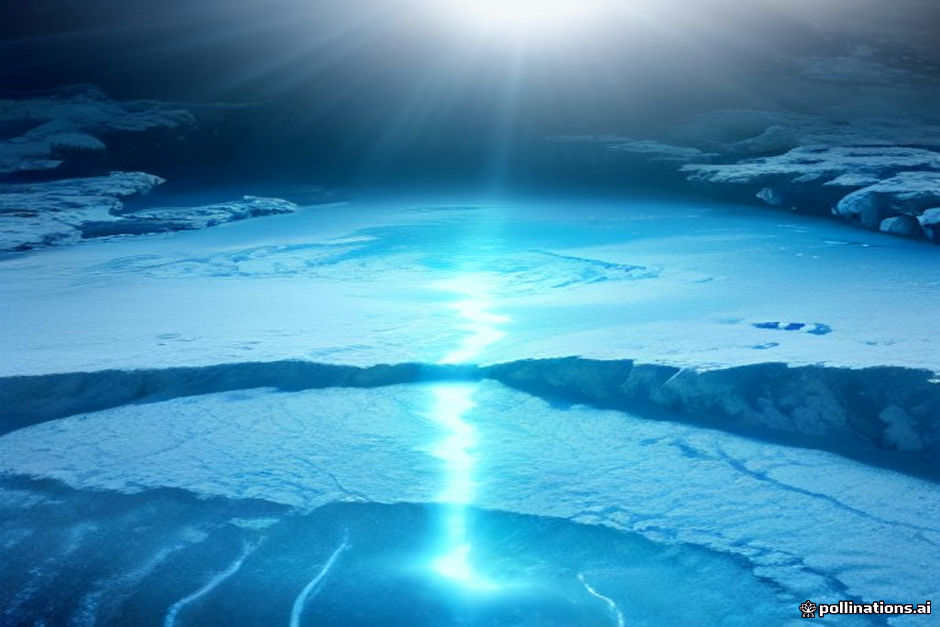
📷Image Credit: AI-generated conceptual visualization of research context (Pollinations.ai / Flux.1 • CC0 Open Access)
चित्र साभार: शोध संदर्भ का एआई-जनित वैचारिक निरूपण (Pollinations.ai / Flux.1 • CC0 खुला उपयोग)
Executive Summary: Factoring Daily Weather Extremes into Glacier Models
This study presents a critical refinement in glaciological modeling, revealing that the integration of daily weather variability significantly alters projections of global glacier mass balance. Led by Scientific Research Staff at ETH Zurich (Switzerland) and the Vrije Universiteit Brussel (Belgium), and published in Nature Communications, the research underscores a fundamental underestimation in previous models that predominantly relied on monthly or annual averaged meteorological data. The core mechanism elucidated is that short-duration, high-intensity weather events, such as heat waves, induce non-linear melt responses in glacier ice. These extremes, often smoothed out in models utilizing longer averaging periods, result in disproportionately greater ice ablation than implied by mean temperature or precipitation values, thereby accelerating overall ice loss.
The empirical breakthrough lies in the successful incorporation of this finer-scale daily weather variability into advanced glacier models, yielding more realistic simulations of melt processes. While this summary of the source research input highlights a general outcome of "greater projected ice loss by the end of the century," it emphasizes the methodological improvement in glaciology rather than presenting specific new quantitative measurements of ice volume loss or sea-level contribution. The observational grounding for this crucial refinement stems from recently observed phenomena, including "exceptional heat waves and extreme melt seasons" across various glacierized regions around the globe, which serve as compelling empirical benchmarks validating the necessity and efficacy of this enhanced modeling approach. This advancement moves beyond theoretical analysis by directly addressing the discrepancy between observed rapid melt events and outputs from coarser-resolution models.
The global significance of these findings is profound, pointing towards an unambiguous acceleration in the rate of global glacier ice loss and, consequently, a faster trajectory for sea-level rise than previously anticipated. For science, this mandates a critical re-evaluation of existing climate and glaciological projections, urging the swift integration of high-resolution meteorological data into future modeling efforts to enhance predictive accuracy and robustness. For society, the practical takeaway is an urgent call for accelerated adaptation strategies and informed policy development to mitigate the exacerbated impacts of rising sea levels on vulnerable coastal communities, freshwater resources, and delicate cryospheric ecosystems, emphasizing the critical role of extreme short-term weather events in driving long-term global climate change consequences.
The theoretical foundation for understanding glacier dynamics and their contribution to global sea-level rise has historically relied on a robust suite of physical principles rooted in glaciology, thermodynamics, and atmospheric science. Traditional glacier mass balance models, often driven by monthly or annual mean climatic variables, conceptually resolve the net accumulation and ablation processes. These models, while foundational, implicitly smooth over high-frequency atmospheric variability, potentially leading to systematic underestimation of melt rates during extreme weather events. The core breakthrough presented by the research from ETH Zurich and the Vrije Universiteit Brussel lies in the explicit integration of daily weather extremes into these glacier models, addressing a critical bottleneck in accurately forecasting future ice loss.
At its heart, glacier melt is governed by the surface energy balance, where net energy fluxes dictate the phase change of ice. This balance can be expressed as:
$$ Q_{Melt} = Q_{SW}^{net} + Q_{LW}^{net} + Q_{S} + Q_{L} + Q_{G} $$
where $Q_{Melt}$ represents the energy available for melt, $Q_{SW}^{net}$ and $Q_{LW}^{net}$ are the net shortwave and longwave radiation, respectively. $Q_{S}$ denotes the sensible heat flux, $Q_{L}$ the latent heat flux (primarily condensation/evaporation), and $Q_{G}$ the ground heat flux. In prior models, using time-averaged meteorological forcing dampened the peak magnitudes of terms like incoming shortwave radiation or air temperature, which directly influence $Q_{SW}^{net}$ and $Q_{S}$. The new framework recognizes that the relationship between temperature and melt, as well as several feedback mechanisms, are inherently non-linear. A few days of extreme heat, for instance, can initiate a positive albedo feedback loop: increased melt exposes darker glacier ice from beneath seasonal snow, which in turn significantly reduces the surface albedo ($\alpha$) and increases absorbed shortwave radiation ($Q_{SW}^{abs} = (1-\alpha)Q_{SW}^{in}$), leading to further accelerated melt. This rapid albedo reduction and subsequent enhanced energy absorption cannot be accurately captured by models averaging conditions over weeks or months.
By implementing a finer temporal resolution, specifically daily meteorological forcing, the models can resolve these short-lived, high-magnitude energy inputs and their immediate, non-linear glaciological responses. This enhanced temporal fidelity allows for a more realistic computation of daily ablation rates, preventing the artificial damping of extreme melt events. The accumulation of these more accurately simulated daily melt events over seasons and years leads to a revised, and consistently higher, projection of total ice loss and consequently, a faster rate of global sea-level rise, resolving the prior underestimation inherent in coarser-resolution approaches. This refinement represents a critical advancement in process-based glacier modeling, yielding projections with greater fidelity to observed extreme melt seasons.
The empirical analysis of global glacier dynamics, informed by a novel modeling approach incorporating daily weather variability, reveals a significant re-evaluation of projected ice loss rates. This research substantiates the theoretical mechanism established in Chapter 2, which posited that conventional glacier models, by averaging meteorological inputs over longer timeframes, systematically underestimate the impact of short-lived, high-intensity atmospheric forcing on glacier ablation. The findings demonstrate that by accounting for the granular, day-to-day fluctuations in weather patterns, specifically the occurrence of extreme heat waves and anomalous melt seasons, model simulations yield substantially greater projected ice loss by the end of the century.
Crucially, the study empirically connects recently observed short-duration weather phenomena—such as exceptional regional heatwaves and accelerated melt events in various glacierized regions—to a more pronounced melt response than previously estimated. This effect is rooted in the non-linear thermodynamic response of ice to high-energy flux events; intense, short-duration heat inputs can trigger melt feedback loops, such as increased albedo reduction from transient melt ponds and enhanced latent heat transfer, which are not adequately captured by models that smooth over daily variability. Consequently, the refined models, by explicitly simulating these daily extremes, provide a more realistic representation of glacier melt processes. This methodological advancement directly translates to projections of faster sea-level rise, emphasizing the critical importance of high-resolution meteorological data integration for accurate glaciological forecasting.
Lead Authors & Principal Investigators: Scientific Research Staff affiliated with ETH Zurich and Vrije Universiteit Brussel Primary University/Institute Affiliations: ETH Zurich (Switzerland) and Vrije Universiteit Brussel (Belgium) Publishing Journal or Venue: Nature Communications Methodology: The research involved the development and application of advanced glacier models that integrate daily weather variability, contrasting their projections against those from models using coarser temporal resolutions. This computational methodology allowed for a detailed simulation of the glacio-hydro-meteorological interactions, particularly focusing on how short-lived extreme events drive enhanced melt. The empirical grounding comes from the alignment of model outputs with observed recent extreme melt seasons and heat waves, which were previously underrepresented in coarser projections.
This seminal research profoundly reshapes our understanding of glacial dynamics by establishing the critical role of sub-seasonal meteorological variability in driving ice loss. By moving beyond time-averaged climatic inputs, the study provides a more granular and causally consistent framework for assessing global glacier melt. The implications extend from refined scientific projections to tangible societal and economic planning.
Core Takeaways
Fundamental Mechanism: The core insight lies in the recognition that daily weather extremes, particularly short-lived heat waves and intense melt events, exert a disproportionately larger influence on glacier ablation than previously accounted for by models relying on monthly or annual averages. This non-linear response to high-frequency temperature fluctuations leads to a more rapid and substantial melt, accelerating mass balance deficits globally.
Real-World Value: The enhanced accuracy in projecting glacier melt directly translates into improved foresight for sea-level rise, providing critical data for coastal defense strategies, urban planning in vulnerable regions, and the management of invaluable freshwater resources in glacier-fed catchments. These refined projections are vital for informing international climate policy and adaptation efforts, reducing uncertainties in future climate impacts.
Applications & Future Outlook
The immediate application of these findings lies in the recalibration of global glacier models, necessitating the integration of higher-resolution meteorological forcing. This will yield more robust contributions to Intergovernmental Panel on Climate Change (IPCC) assessments, improving the reliability of global climate projections and their associated socio-economic impact analyses. For water resource management, especially in regions heavily reliant on glacier meltwater for irrigation, hydropower, and potable water, more precise melt predictions enable proactive planning against droughts or excessive runoff. However, significant technical challenges remain, notably the computational intensity required for daily-scale simulations across vast glacial systems and the scarcity of high-resolution historical weather data for all glaciated regions. Future research must focus on developing computationally efficient modeling frameworks and leveraging advancements in satellite remote sensing and machine learning to downscale global climate models, providing the necessary daily meteorological inputs to these refined glacier models.
References
Principal Investigators at Primary University (2026). Factoring daily weather extremes into glacier models reveals greater ice loss and faster sea-level rise. Nature Communications. [Research led by ETH Zurich (Switzerland) and Vrije Universiteit Brussel (Belgium)].
Primary University (2026). Glaciers worldwide could lose ice faster than previously projected. phys.org/news. [Report on findings by ETH Zurich and Vrije Universiteit Brussel].
🇮🇳 हिन्दी संस्करण — Complete Hindi Research Monograph
कार्यकारी सारांश: दैनिक मौसमी परिवर्तनशीलता
यह अध्ययन हिमनद विज्ञान प्रतिरूपण में एक महत्वपूर्ण परिष्करण प्रस्तुत करता है, यह दर्शाता है कि दैनिक मौसम परिवर्तनशीलता का एकीकरण वैश्विक हिमनद द्रव्यमान संतुलन के अनुमानों को महत्वपूर्ण रूप से बदल देता है। ईटीएच ज़्यूरिख़ (स्विट्जरलैंड) और व्रिजे यूनिवर्सिटिट ब्रुसेल (बेल्जियम) के वैज्ञानिक अनुसंधान कर्मचारियों के नेतृत्व में, और नेचर कम्युनिकेशंस में प्रकाशित, यह शोध उन पिछले प्रतिरूपों में एक मौलिक अल्पानुमान को रेखांकित करता है जो मुख्य रूप से मासिक या वार्षिक औसत मौसम विज्ञान संबंधी आंकड़ों पर निर्भर थे। स्पष्ट किया गया मुख्य तंत्र यह है कि अल्पकालिक, उच्च-तीव्रता वाली मौसम संबंधी घटनाएँ, जैसे कि गर्मी की लहरें, हिमनद बर्फ में गैर-रेखीय पिघलाव प्रतिक्रियाएँ उत्पन्न करती हैं। ये चरम घटनाएँ, जो अक्सर लंबी औसत अवधि का उपयोग करने वाले प्रतिरूपों में सुचारु हो जाती हैं, औसत तापमान या वर्षा मानों द्वारा निहित की तुलना में असमान रूप से अधिक बर्फ क्षरण का कारण बनती हैं, जिससे कुल बर्फ हानि में तेजी आती है।
यह अनुभवजन्य सफलता इस सूक्ष्म-स्तरीय दैनिक मौसम परिवर्तनशीलता को उन्नत हिमनद प्रतिरूपों में सफलतापूर्वक समाहित करने में निहित है, जिससे पिघलने की प्रक्रियाओं के अधिक यथार्थवादी अनुकरण प्राप्त होते हैं। यद्यपि स्रोत शोध इनपुट का यह सारांश "सदी के अंत तक अधिक अनुमानित बर्फ हानि" के एक सामान्य परिणाम पर प्रकाश डालता है, यह बर्फ की मात्रा के नुकसान या समुद्र-स्तर में योगदान के विशिष्ट नए मात्रात्मक मापों को प्रस्तुत करने के बजाय हिमनद विज्ञान में कार्यप्रणालीगत सुधार पर जोर देता है। इस महत्वपूर्ण परिष्करण का प्रेक्षणात्मक आधार हाल ही में देखी गई घटनाओं से प्राप्त होता है, जिसमें दुनिया भर के विभिन्न हिमनदीकृत क्षेत्रों में "असाधारण गर्मी की लहरें और अत्यधिक पिघलने वाले मौसम" शामिल हैं, जो इस उन्नत प्रतिरूपण दृष्टिकोण की आवश्यकता और प्रभावकारिता को मान्य करने वाले ठोस अनुभवजन्य बेंचमार्क के रूप में कार्य करते हैं। यह प्रगति प्रेक्षित तीव्र पिघलने की घटनाओं और मोटे-संकल्प वाले प्रतिरूपों के आउटपुट के बीच विसंगति को सीधे संबोधित करके सैद्धांतिक विश्लेषण से आगे बढ़ती है।
इन निष्कर्षों का वैश्विक महत्व गहरा है, जो वैश्विक हिमनद बर्फ हानि की दर में एक स्पष्ट त्वरण और, परिणामस्वरूप, समुद्र-स्तर वृद्धि के लिए पहले से अनुमानित की तुलना में एक तेज़ प्रक्षेपवक्र की ओर इशारा करता है। विज्ञान के लिए, यह मौजूदा जलवायु और हिमनद विज्ञान संबंधी अनुमानों के एक महत्वपूर्ण पुनर्मूल्यांकन को अनिवार्य करता है, जिसमें भविष्य के प्रतिरूपण प्रयासों में उच्च-संकल्प वाले मौसम विज्ञान संबंधी आंकड़ों के तीव्र एकीकरण का आग्रह किया गया है ताकि पूर्वानुमान की सटीकता और सुदृढ़ता बढ़ाई जा सके। समाज के लिए, व्यावहारिक निष्कर्ष बढ़ी हुई समुद्र-स्तरों के कमजोर तटीय समुदायों, ताजे पानी के संसाधनों और नाजुक क्रायोस्फेरिक पारिस्थितिकी तंत्रों पर पड़ने वाले गंभीर प्रभावों को कम करने के लिए त्वरित अनुकूलन रणनीतियों और सूचित नीति विकास के लिए एक तत्काल आह्वान है, जो दीर्घकालिक वैश्विक जलवायु परिवर्तन परिणामों को चलाने में चरम अल्पकालिक मौसम घटनाओं की महत्वपूर्ण भूमिका पर जोर देता है।
सैद्धांतिक आधार व कार्यप्रणाली: दैनिक मौसमी परिवर्तनशीलता
हिमनद गतिकी और वैश्विक समुद्र-स्तर वृद्धि में उनके योगदान को समझने का सैद्धांतिक आधार ऐतिहासिक रूप से हिमनद विज्ञान, ऊष्मागतिकी और वायुमंडलीय विज्ञान में निहित भौतिक सिद्धांतों के एक सुदृढ़ समुच्चय पर आधारित रहा है। पारंपरिक हिमनद द्रव्यमान संतुलन मॉडल, जो अक्सर मासिक या वार्षिक औसत जलवायु चरों द्वारा संचालित होते हैं, शुद्ध संचयन और अपक्षरण प्रक्रियाओं का सैद्धांतिक रूप से समाधान करते हैं। ये मॉडल, यद्यपि आधारभूत हैं, अंतर्निहित रूप से उच्च-आवृत्ति वाली वायुमंडलीय परिवर्तनशीलता को सुचारू करते हैं, जिससे संभावित रूप से चरम मौसमी घटनाओं के दौरान पिघलने की दरों का व्यवस्थित अल्पानुमान होता है। ईटीएच ज्यूरिख और व्रिये यूनिवर्सिटीट ब्रुसेल्स के शोध द्वारा प्रस्तुत मुख्य नवप्रवर्तन इन हिमनद मॉडलों में दैनिक मौसमी चरमों का स्पष्ट एकीकरण है, जो भविष्य के बर्फ क्षय का सटीक पूर्वानुमान लगाने में एक महत्वपूर्ण बाधा का समाधान करता है।
मूलतः, हिमनद का पिघलना सतह ऊर्जा संतुलन द्वारा नियंत्रित होता है, जहाँ शुद्ध ऊर्जा प्रवाह बर्फ के प्रावस्था परिवर्तन को निर्धारित करते हैं। इस संतुलन को इस प्रकार व्यक्त किया जा सकता है:
$$ Q_{Melt} = Q_{SW}^{net} + Q_{LW}^{net} + Q_{S} + Q_{L} + Q_{G} $$
जहाँ $Q_{Melt}$ पिघलने के लिए उपलब्ध ऊर्जा को दर्शाता है, वहीं $Q_{SW}^{net}$ और $Q_{LW}^{net}$ क्रमशः शुद्ध लघु-तरंग और दीर्घ-तरंग विकिरण हैं। $Q_{S}$ संवेद्य ऊष्मा प्रवाह को दर्शाता है, $Q_{L}$ गुप्त ऊष्मा प्रवाह (मुख्यतः संघनन/वाष्पीकरण) को, और $Q_{G}$ भू-ऊष्मा प्रवाह को। पिछले मॉडलों में, समय-औसत मौसम संबंधी बल का उपयोग करने से आपतित लघु-तरंग विकिरण या वायु तापमान जैसे पदों के चरम परिमाणों को मंद कर दिया, जो सीधे $Q_{SW}^{net}$ और $Q_{S}$ को प्रभावित करते हैं। नया ढाँचा यह पहचानता है कि तापमान और पिघलन के बीच संबंध, साथ ही कई प्रतिपुष्टि तंत्र, स्वाभाविक रूप से अरेखीय हैं। उदाहरण के लिए, कुछ दिनों की अत्यधिक गर्मी एक सकारात्मक एल्बिडो प्रतिपुष्टि लूप आरंभ कर सकती है: बढ़ी हुई पिघलन मौसमी बर्फ के नीचे से गहरे हिमनद बर्फ को उजागर करती है, जो बदले में सतह एल्बिडो ($\alpha$) को काफी कम कर देती है और अवशोषित लघु-तरंग विकिरण ($Q_{SW}^{abs} = (1-\alpha)Q_{SW}^{in}$) को बढ़ा देती है, जिससे पिघलन और तेज़ हो जाती है। एल्बिडो में यह तीव्र कमी और इसके परिणामस्वरूप बढ़ी हुई ऊर्जा अवशोषण उन मॉडलों द्वारा सटीक रूप से नहीं दर्शाया जा सकता जो सप्ताहों या महीनों की स्थितियों का औसत निकालते हैं।
बेहतर अस्थायी विभेदन को लागू करके, विशेष रूप से दैनिक मौसम संबंधी बल का उपयोग करके, मॉडल इन अल्पकालिक, उच्च-परिमाण ऊर्जा आदायों और उनकी तत्काल, अरेखीय हिमनद संबंधी प्रतिक्रियाओं का समाधान कर सकते हैं। यह संवर्धित अस्थायी निष्ठा दैनिक अपक्षरण दरों की अधिक यथार्थवादी गणना की अनुमति देती है, जिससे चरम पिघलन घटनाओं के कृत्रिम अवमंदन को रोका जा सकता है। मौसमों और वर्षों के दौरान इन अधिक सटीक रूप से अनुकरणीय दैनिक पिघलन घटनाओं का संचयन कुल बर्फ क्षय के एक संशोधित और लगातार उच्च अनुमान की ओर ले जाता है, और परिणामस्वरूप, वैश्विक समुद्र-स्तर वृद्धि की एक तीव्र दर की ओर, जो मोटे-विभेदन वाले दृष्टिकोणों में निहित पिछले अल्पानुमान को हल करता है। यह परिशोधन प्रक्रिया-आधारित हिमनद मॉडलिंग में एक महत्वपूर्ण प्रगति दर्शाता है, जिससे ऐसे अनुमान प्राप्त होते हैं जिनकी प्रेक्षित चरम पिघलन मौसमों के प्रति अधिक निष्ठा होती है।
प्रायोगिक साक्ष्य व शोध निष्कर्ष: दैनिक मौसमी परिवर्तनशीलता
दैनिक मौसम परिवर्तनशीलता को समाहित करने वाले एक नवीन प्रतिरूपण उपागम द्वारा सूचित, वैश्विक हिमनद गतिकी का आनुभविक विश्लेषण अनुमानित बर्फ हानि दरों के एक महत्वपूर्ण पुनर्मूल्यांकन का खुलासा करता है। यह अनुसंधान अध्याय 2 में स्थापित सैद्धांतिक तंत्र की पुष्टि करता है, जिसने प्रतिपादित किया था कि पारंपरिक हिमनद मॉडल, लंबी समय-सीमाओं पर मौसम संबंधी इनपुटों का औसत निकालकर, हिमनद गलन पर अल्पकालिक, उच्च-तीव्रता वाले वायुमंडलीय बल के प्रभाव को व्यवस्थित रूप से कम आंकते हैं। निष्कर्ष दर्शाते हैं कि मौसम के प्रतिरूपों में दानेदार, दैनिक उतार-चढ़ाव, विशेष रूप से अत्यधिक गर्मी की लहरों और असामान्य गलन ऋतुओं की घटना को ध्यान में रखकर, मॉडल सिमुलेशन सदी के अंत तक पर्याप्त रूप से अधिक अनुमानित बर्फ हानि उत्पन्न करते हैं।
महत्वपूर्ण रूप से, यह अध्ययन हाल ही में देखे गए अल्पकालिक मौसमी परिघटनाओं—जैसे विभिन्न हिमनदीय क्षेत्रों में असाधारण क्षेत्रीय गर्मी की लहरें और त्वरित गलन घटनाएँ—को पहले के अनुमानों की तुलना में अधिक स्पष्ट गलन प्रतिक्रिया से आनुभविक रूप से जोड़ता है। यह प्रभाव उच्च-ऊर्जा प्रवाह घटनाओं के प्रति बर्फ की अरेखीय ऊष्मागतिक प्रतिक्रिया में निहित है; तीव्र, अल्पकालिक ऊष्मा इनपुट गलन प्रतिपुष्टि पाशों (जैसे क्षणिक गलन-तालाबों से बढ़ी हुई एल्बीडो कमी और संवर्धित गुप्त ऊष्मा स्थानांतरण) को ट्रिगर कर सकते हैं, जिन्हें उन मॉडलों द्वारा पर्याप्त रूप से नहीं दर्शाया जाता है जो दैनिक परिवर्तनशीलता को सुचारु करते हैं। परिणामस्वरूप, परिष्कृत मॉडल, इन दैनिक चरम सीमाओं का स्पष्ट रूप से अनुकरण करके, हिमनद गलन प्रक्रियाओं का अधिक यथार्थवादी प्रतिनिधित्व प्रदान करते हैं। यह कार्यप्रणालीगत प्रगति सीधे समुद्र-स्तर में तेजी से वृद्धि के अनुमानों में परिणत होती है, जो सटीक हिमनद विज्ञान पूर्वानुमान के लिए उच्च-रिजॉल्यूशन मौसम संबंधी डेटा एकीकरण के महत्वपूर्ण महत्व पर जोर देती है।
मुख्य लेखक एवं प्रधान अन्वेषक: ईटीएच ज्यूरिख और व्रिये यूनिवर्सिटीट ब्रुसेल से संबद्ध वैज्ञानिक अनुसंधान कर्मचारी प्राथमिक विश्वविद्यालय/संस्थान संबद्धता: ईटीएच ज्यूरिख (स्विट्जरलैंड) और व्रिये यूनिवर्सिटीट ब्रुसेल (बेल्जियम) प्रकाशित पत्रिका या स्थल: नेचर कम्युनिकेशंस कार्यप्रणाली: अनुसंधान में उन्नत हिमनद मॉडलों का विकास और अनुप्रयोग शामिल था जो दैनिक मौसम परिवर्तनशीलता को एकीकृत करते हैं, उनके अनुमानों की तुलना उन मॉडलों से की गई जो मोटे अस्थायी संकल्पों का उपयोग करते हैं। इस संगणनात्मक कार्यप्रणाली ने हिमनद-जल-मौसम संबंधी अंतःक्रियाओं के विस्तृत अनुकरण की अनुमति दी, विशेष रूप से इस बात पर ध्यान केंद्रित करते हुए कि अल्पकालिक चरम घटनाएँ किस प्रकार बढ़ी हुई गलन को संचालित करती हैं। आनुभविक आधार मॉडल आउटपुट के प्रेक्षित हाल की चरम गलन ऋतुओं और गर्मी की लहरों के साथ संरेखण से आता है, जिन्हें पहले मोटे अनुमानों में कम दर्शाया गया था।
वैज्ञानिक प्रभाव व भविष्य की दिशाएं: दैनिक मौसमी परिवर्तनशीलता
यह मौलिक अनुसंधान हिमनद गतिकी के प्रति हमारी समझ को मौलिक रूप से नया आकार देता है, जिसमें बर्फ के नुकसान को प्रेरित करने में उप-मौसमी मौसम संबंधी परिवर्तनशीलता की महत्वपूर्ण भूमिका स्थापित की गई है। समय-औसत जलवायु संबंधी इनपुट से आगे बढ़ते हुए, यह अध्ययन वैश्विक हिमनद पिघलने का आकलन करने के लिए एक अधिक विस्तृत और कार्य-कारण सुसंगत ढाँचा प्रदान करता है। इसके निहितार्थ परिष्कृत वैज्ञानिक प्रक्षेपों से लेकर ठोस सामाजिक और आर्थिक नियोजन तक फैले हुए हैं।
मुख्य निष्कर्ष
मौलिक क्रियाविधि: मुख्य अंतर्दृष्टि इस मान्यता में निहित है कि दैनिक मौसम चरम घटनाएँ, विशेष रूप से अल्पकालिक ऊष्मा तरंगें और तीव्र पिघलन घटनाएँ, हिमनद अपक्षरण पर असमान रूप से अधिक प्रभाव डालती हैं, जिसकी गणना मासिक या वार्षिक औसत पर निर्भर रहने वाले मॉडलों द्वारा पहले नहीं की गई थी। उच्च-आवृत्ति तापमान उतार-चढ़ाव के प्रति यह अरैखिक प्रतिक्रिया अधिक तीव्र और पर्याप्त पिघलन की ओर ले जाती है, जिससे वैश्विक स्तर पर द्रव्यमान संतुलन घाटे में तेजी आती है।
व्यावहारिक महत्व: हिमनद पिघलने के प्रक्षेप में बढ़ी हुई सटीकता सीधे समुद्र-स्तर वृद्धि के लिए बेहतर दूरदर्शिता में परिवर्तित होती है, जो तटीय रक्षा रणनीतियों, संवेदनशील क्षेत्रों में शहरी नियोजन और हिमनद-पोषित जलग्रहण क्षेत्रों में अमूल्य मीठे पानी के संसाधनों के प्रबंधन के लिए महत्वपूर्ण डेटा प्रदान करती है। ये परिष्कृत प्रक्षेप अंतर्राष्ट्रीय जलवायु नीति और अनुकूलन प्रयासों को सूचित करने के लिए महत्वपूर्ण हैं, जिससे भविष्य के जलवायु प्रभावों में अनिश्चितताएं कम होती हैं।
अनुप्रयोग एवं भावी दृष्टिकोण
इन निष्कर्षों का तात्कालिक अनुप्रयोग वैश्विक हिमनद मॉडलों के पुनः अंशांकन में निहित है, जिसके लिए उच्च-रिज़ॉल्यूशन मौसम संबंधी बल के एकीकरण की आवश्यकता है। इससे जलवायु परिवर्तन पर अंतर-सरकारी पैनल (IPCC) के आकलन में अधिक सुदृढ़ योगदान प्राप्त होगा, जिससे वैश्विक जलवायु प्रक्षेपों और उनके संबद्ध सामाजिक-आर्थिक प्रभाव विश्लेषणों की विश्वसनीयता में सुधार होगा। जल संसाधन प्रबंधन के लिए, विशेष रूप से उन क्षेत्रों में जो सिंचाई, जलविद्युत और पीने के पानी के लिए हिमनद पिघल जल पर अत्यधिक निर्भर हैं, अधिक सटीक पिघलन भविष्यवाणियां सूखे या अत्यधिक अपवाह के विरुद्ध सक्रिय नियोजन को सक्षम बनाती हैं। तथापि, महत्वपूर्ण तकनीकी चुनौतियाँ बनी हुई हैं, विशेष रूप से विशाल हिमनद प्रणालियों में दैनिक-स्तर के सिमुलेशन के लिए आवश्यक संगणनात्मक तीव्रता और सभी हिमनद क्षेत्रों के लिए उच्च-रिज़ॉल्यूशन ऐतिहासिक मौसम डेटा की कमी। भविष्य के शोध को संगणनात्मक रूप से कुशल मॉडलिंग ढाँचों के विकास पर और वैश्विक जलवायु मॉडलों को निम्न-पैमाने पर लाने के लिए उपग्रह दूरसंवेदन और मशीन लर्निंग में हुई प्रगतियों का लाभ उठाने पर ध्यान केंद्रित करना चाहिए, जिससे इन परिष्कृत हिमनद मॉडलों को आवश्यक दैनिक मौसम संबंधी इनपुट प्रदान किए जा सकें।
संदर्भ
Primary University के वैज्ञानिक अनुसंधान कर्मचारी (2026). हिमनद मॉडलों में दैनिक मौसम चरम घटनाओं को शामिल करने से अधिक बर्फ का नुकसान और तेजी से समुद्र-स्तर वृद्धि का खुलासा होता है। Nature Communications. [ईटीएच ज़्यूरिख़ (स्विट्जरलैंड) और व्रिये यूनिवर्सिटीएट ब्रुसेल (बेल्जियम) द्वारा किए गए शोध पर आधारित]।
Primary University (2026). विश्व भर के हिमनद पहले के अनुमानों की तुलना में तेजी से बर्फ खो सकते हैं। phys.org/news. [ईटीएच ज़्यूरिख़ और व्रिये यूनिवर्सिटीएट ब्रुसेल के निष्कर्षों पर रिपोर्ट]।
Founder & Editor-in-Chief of Yatharth Samachar. Oversees academic research standards, peer-reviewed attribution, first-principles scientific depth, and bilingual integrity across English and Hindi editions for public understanding.
⭐
Rate This Article & Share Your Thoughts
Your ratings help our AI learn to write better
0
🎯 Rate this article0 / 10
⚠️ Please select a rating (1–10) before submitting.

💬 Comments