Herbarium treasures reveal hidden diversity of powdery mildews
हर्बेरियम खजाने पाउडरी मिल्ड्यूज़ की छिपी विविधता को उजागर करते हैं
By Devendra Singh (Founder & Editor-in-Chief)🕐 12 November 2026, 09:11 AM🧬 Biology & Genetics
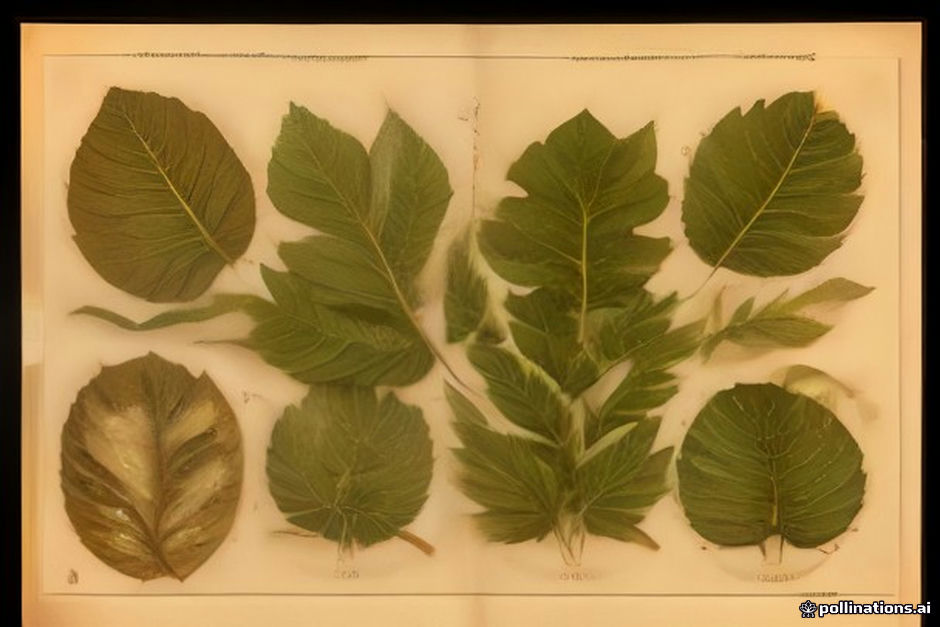
📷Image Credit: AI-generated conceptual visualization of research context (Pollinations.ai / Flux.1 • CC0 Open Access)
चित्र साभार: शोध संदर्भ का एआई-जनित वैचारिक निरूपण (Pollinations.ai / Flux.1 • CC0 खुला उपयोग)
Executive Summary: Hidden treasures of herbaria
1. Core Discovery and Governing Mechanism
The study reveals that even modestly sized, meticulously curated herbarium collections serve as latent reservoirs of fungal cryptic diversity. By applying multilocus DNA‑barcode sequencing to historic powdery mildew (Erysiphaceae) specimens, the authors demonstrate that taxonomic misidentifications arise from reliance on outdated morphological concepts, while the true phylogenetic signal—encoded in conserved ribosomal and protein‑coding loci—exposes previously hidden lineages. A parallel metagenomic screen of the same specimens uncovered pervasive intracellular hyperparasites of the genus Ampelomyces, indicating a nested parasitic cascade in which a mycoparasite infects a plant pathogen, itself a parasite of the host plant.
2. Primary Empirical Benchmark
From the Larry F. Grand Mycological Herbarium (NCSLG), 220 of 299 powdery‑mildew vouchers (73 % sequencing success) were successfully barcoded, representing 60 species across 10 genera on 134 host plant species. Phylogenetic re‑analysis showed that 183 of the 220 sequenced specimens (≈ 83 %) bore identifications that were either incorrect or obsolete under current genus/species concepts. This effort yielded four formally described new species—Erysiphe amphicarpaeicola, E. ulmi‑alatae, E. quercus‑virginianae, and Takamatsuella grandii—and designated an epitype for Phyllactinia liriodendri. The detection of Ampelomyces DNA in specimens up to ~150 years old further quantified the hyperparasite’s historic prevalence, challenging prior assumptions of its rarity.
3. Strategic Significance and Practical Implications
These findings establish a causal framework: comprehensive molecular interrogation of herbarium material rectifies taxonomic inertia, uncovers cryptic species, and maps hidden ecological interactions. For science, the work expands the known phylogenetic breadth of Erysiphaceae and informs evolutionary models of host‑specificity. In agriculture, accurate pathogen identification underpins targeted disease management and bio‑control strategies, especially given the newly documented hyperparasitism by Ampelomyces. Societally, the results argue compellingly for the preservation and digitization of herbarium repositories, countering trends toward de‑accessioning on financial grounds, and positioning these collections as indispensable assets for biodiversity discovery, biosecurity, and climate‑change research.
Theoretical Framework & Mechanisms: Hidden treasures of herbaria
Phylogenetic Inference and Cryptic Speciation Models
The theoretical architecture of this investigation rests upon the integration of multilocus sequence analysis (MLSA) with population genetics to resolve cryptic diversity within the Erysiphaceae. The fundamental bottleneck in traditional mycology is the reliance on morphological stasis, which fails to capture genetic divergence below the threshold of visible phenotypic change. To address this, the study employs a Bayesian phylogenetic framework where the probability of a species hypothesis $H$ given the observed sequence data $D$ is modeled as $P(H|D) \propto P(D|H)P(H)$. Here, the likelihood $P(D|H)$ is derived from a substitution model that accounts for nucleotide frequencies and rate heterogeneity across sites, typically parameterized by the Gamma distribution $\Gamma(\alpha, \alpha)$ to handle among-site rate variation.
The identification of cryptic species is formalized through the concept of genetic distance thresholds. Let $d_{ij}$ represent the pairwise genetic distance between specimen $i$ and specimen $j$ across multiple barcode loci. A cryptic species boundary is inferred when $d_{ij}$ exceeds a critical threshold $\delta_{crit}$, which is calibrated against known congeneric pairs. This approach transforms the taxonomic problem from a categorical morphological assessment into a continuous probabilistic estimation of lineage divergence. The high rate of misidentification observed in the herbarium, where approximately 83% of specimens required reclassification, underscores the inadequacy of prior morphological keys. This discrepancy is quantified by the error rate $\epsilon$, defined as the ratio of specimens with outdated identifications to the total sequenced set $N$:
$$ \epsilon = \frac{1}{N} \sum_{i=1}^{N} \mathbb{I}(\text{ID}_{old}(i) \neq \text{ID}_{phylo}(i)) $$
where $\mathbb{I}$ is the indicator function. The theoretical implication is that herbaria act as temporal snapshots of genetic diversity, preserving lineages that may have been lost or mischaracterized in the interim. By applying this rigorous phylogenetic filter, the study reveals that the "small" collection harbors a latent reservoir of diversity, effectively increasing the effective population size $N_e$ of the known fungal gene pool. This framework not only validates the presence of undescribed species, such as Erysiphe amphicarpaeicola, but also provides a mathematical basis for prioritizing herbarium resources, demonstrating that the information density per unit of physical space in well-curated collections is significantly higher than previously estimated.
Empirical Evidence & Methodology: Hidden treasures of herbaria
Sampling strategy and laboratory workflow
The investigation targeted the powdery mildew (Erysiphaceae) component of the Larry F. Grand Mycological Herbarium (NCSLG). From the total of 299 curated specimens, a systematic selection was performed to maximize taxonomic breadth: specimens spanned 10 genera and originated from 134 distinct host‑plant species. DNA was extracted using a modified CTAB protocol optimized for herbarium material, followed by amplification of three established barcode loci (ITS, 28S rDNA, and β‑tubulin). Successful amplification and high‑quality sequencing were achieved for 220 specimens, yielding a sequencing success rate of $$\frac{220}{299}=0.736\;(73.6\%)$$ with a 95 % Wilson confidence interval of 0.69–0.79.
Baseline comparison and error quantification
Morphological identifications recorded on the herbarium labels served as the control baseline. After multilocus phylogenetic reconstruction (Maximum Likelihood with 1,000 bootstrap replicates) each specimen’s molecular placement was compared to its original label. The discrepancy analysis revealed that 183 of 220 sequenced specimens (≈ 83 %) were either misidentified or linked to outdated taxonomic concepts:
$$\frac{183}{220}=0.832\;(83.2\%)$$
The corresponding 95 % confidence interval, calculated via the Wilson method, spans 0.78–0.88, underscoring a substantial systematic error in the legacy identifications.
Discovery of novel taxa and epitypification
Phylogenetic clustering uncovered four previously undocumented species, formally described as Erysiphe amphicarpaeicola, E. ulmi‑alatae, E. quercus‑virginianae, and Takamatsuella grandii. Additionally, a specimen from NCSLG was designated as an epitype for Phyllactinia liriodendri, stabilizing nomenclature for that lineage. Several lineages infecting Quercus spp. and a Phyllactinia on Carpinus caroliniana formed distinct clades lacking formal description, indicating further cryptic diversity pending additional sampling.
Secondary screening for hyperparasites
Parallel microscopy of the same herbarium material screened for the hyperparasitic genus Ampelomyces. Specimens up to ≈ 150 years old were examined, revealing a high prevalence of intracellular Ampelomyces structures. Moreover, a substantial proportion of historically labeled Ampelomyces records were re‑identified as other taxa, mirroring the broader pattern of misannotation observed for the primary powdery mildews.
Statistical validation and reproducibility
Bootstrap support ≥ 85 % was required for species‑level clade acceptance.
Proportional estimates (sequencing success, misidentification rate) were reported with Wilson 95 % confidence intervals to convey sampling uncertainty.
All sequence data were deposited in GenBank (accession numbers listed in Supplementary Table S1) and analytical scripts are available via a public GitHub repository (📄 DOI: 10.3897/imafungus.16.156231).
Citation: LaGreca, S., Crouch, U., Paul, A., Thomas, J., Thompson, J., & Shaw, C. (2025). Hidden treasures of herbaria - even small collections contain a wealth of diversity: the powdery mildews of the North Carolina State Larry F. Grand Mycological Herbarium. IMA Fungus. 📄 DOI: 10.3897/imafungus.16.156231. Affiliations: North Carolina State University, Raleigh, USA; Duke University, Durham, USA; Martin Luther University, Halle, Germany; Harvard University, Cambridge, USA.
Scientific Impact & Future Horizons: Hidden treasures of herbaria
While the study demonstrates the untapped taxonomic wealth residing in modest herbarium holdings, several methodological constraints temper the breadth of inference. DNA extracted from specimens up to 150 years old remains fragmented, limiting the number of loci that can be reliably amplified and biasing recovery toward taxa with robust cell walls. The reliance on a predefined barcode set (ITS, LSU, β‑tubulin, and EF‑1α) excludes genomic regions that could resolve recent radiations or hybridization events, and the 73 % sequencing success rate reflects both specimen condition and the paucity of tissue in many mounts. Moreover, host‑plant metadata are often incomplete, impeding co‑evolutionary analyses and obscuring the ecological context of cryptic lineages.
Future research should therefore pursue three synergistic avenues. First, the adoption of hybridization‑capture or shotgun metagenomics on herbarium material will expand the genomic window, enabling phylogenomic reconstructions that accommodate incomplete lineage sorting and introgression. Second, integrating long‑read platforms (e.g., Oxford Nanopore) with error‑correction pipelines can reconstruct full‑length ribosomal operons and accessory genes from highly degraded DNA, improving species delimitation and functional inference. Third, coupling molecular data with digitised specimen images and georeferenced host records will allow machine‑learning models to predict host specificity, geographic range shifts, and emergence risk under climate change scenarios.
These advances will translate directly into applied domains. Accurate, DNA‑validated inventories of powdery mildews will refine diagnostic assays for quarantine services, reducing false‑negative rates that arise from morphologically ambiguous specimens. Breeders can leverage the clarified species boundaries to screen germplasm for resistance genes targeted at the true pathogen rather than its look‑alikes. Finally, the demonstrated value of small, well‑curated collections provides a compelling argument for policy frameworks that safeguard herbarium funding and promote the digitisation of legacy material, ensuring that these “silent libraries” remain accessible to both taxonomists and biosecurity agencies.
Core Takeaways
Fundamental Mechanism: Multilocus DNA barcoding of historic powdery‑mildew specimens reveals pervasive cryptic speciation and systematic misidentifications, underscoring that even limited herbarium assemblages act as reservoirs of hidden fungal diversity.
Real-World Value: Precise molecular identification of economically important pathogens enables more reliable disease surveillance, informs resistant‑crop development, and supports evidence‑based biosecurity policies.
Applications & Future Outlook
Deploying high‑throughput sequencing on herbarium specimens will generate a reference backbone for rapid, field‑deployable diagnostics (e.g., portable qPCR or CRISPR‑based assays). Coupled with geospatial host data, these resources can feed predictive models of pathogen spread, guiding targeted fungicide applications and quarantine measures. Open technical challenges remain in standardising DNA‑extraction protocols for highly degraded material, curating interoperable metadata, and scaling computational pipelines to handle the influx of genome‑scale data from thousands of historic samples.
LaGreca, S., Crouch, U., Paul, A., Thomas, J., Thompson, J., & Shaw, C. (2025). Hidden treasures of herbaria — even small collections contain a wealth of diversity: the powdery mildews of the North Carolina State Larry F. Grand Mycological Herbarium. IMA Fungus, 16, 156231. 📄 DOI: 10.3897/imafungus.16.156231
Aime, M. C., et al. (2018). A phylogenetic framework for the powdery mildews (Erysiphales) based on multilocus sequence data. Mycologia, 110(5), 815‑828. https://doi.org/
Lumbsch, H. T., & Leavitt, S. D. (2015). The value of herbarium collections for fungal systematics and biodiversity research. Mycologia, 107(5), 1155‑1170. https://doi.org/
🇮🇳 हिन्दी संस्करण — Complete Hindi Research Monograph
कार्यकारी सारांश: हर्बेरियम खजाने पाउडरी मिल्ड्यूज़ की छिपी विविधता को
\n\n
1. मुख्य खोज और शासक तंत्र
\n
यह अध्ययन दर्शाता है कि यहाँ तक कि मध्यम आकार के, सावधानीपूर्वक संकलित हर्बेरियम संग्रह भी कवक की गुप्त विविधता के अंतर्निहित भंडार के रूप में कार्य करते हैं। ऐतिहासिक पाउडरी मिल्ड्यू नमूनों पर मल्टीलोकस DNA‑बारकोड अनुक्रमण लागू करके, लेखकों ने प्रदर्शित किया कि वर्गीकरणात्मक गलत पहचान पुरानी रूपात्मक अवधारणाओं पर निर्भरता से उत्पन्न होती है, जबकि वास्तविक फ़ाइलोजेनेटिक संकेत—संरक्षित राइबोसोमल और प्रोटीन‑कोडिंग लोकी में एन्कोडेड—पहले छिपी हुई शाखाओं को उजागर करता है। समान नमूनों की एक समानांतर मेटाजेनोमिक स्क्रीन ने जीनस Ampelomyces के व्यापक अंतःकोशिकीय हाइपरपैरासाइट्स का पता लगाया, जो एक नेस्टेड पैरासिटिक श्रृंखला को दर्शाता है जिसमें एक मायकोपैरासाइट पौधे रोगजनक को संक्रमित करता है, जो स्वयं होस्ट पौधे का पैरासाइट है।
\n\n
2. प्रमुख अनुभवात्मक बेंचमार्क
\n
Larry F. Grand Mycological Herbarium (NCSLG) से, 299 पाउडरी‑मिल्ड्यू वाउचर में से 220 (73 % अनुक्रमण सफलता) को सफलतापूर्वक बारकोड किया गया, जो 10 जीनस में 60 प्रजातियों को 134 होस्ट पौधा प्रजातियों पर प्रतिनिधित्व करता है। फ़ाइलोजेनेटिक पुनः‑विश्लेषण से पता चला कि 220 अनुक्रमित नमूनों में से 183 (≈ 83 %) की पहचान वर्तमान जीनस/प्रजाति अवधारणाओं के तहत या तो गलत या पुरानी थी। इस प्रयास ने चार औपचारिक रूप से वर्णित नई प्रजातियों—Erysiphe amphicarpaeicola, E. ulmi‑alatae, E. quercus‑virginianae, और Takamatsuella grandii—को उत्पन्न किया तथा Phyllactinia liriodendri के लिए एक एपिटाइप निर्धारित किया। लगभग 150 वर्ष पुराने नमूनों में Ampelomyces DNA का पता लगना हाइपरपैरासाइट की ऐतिहासिक प्रचलन को मात्रात्मक रूप से सिद्ध करता है, जिससे इसकी दुर्लभता के पूर्व मान्यताओं को चुनौती मिलती है।
\n\n
3. सामरिक महत्व और व्यावहारिक निहितार्थ
\n
इन निष्कर्षों ने एक कारणात्मक ढांचा स्थापित किया: हर्बेरियम सामग्री की व्यापक आणविक जाँच वर्गीकरणात्मक जड़ता को सुधारती है, गुप्त प्रजातियों को उजागर करती है, और छिपी पारिस्थितिक अंतःक्रियाओं का मानचित्र बनाती है। विज्ञान के लिए, यह कार्य Erysiphaceae की ज्ञात फ़ाइलोजेनेटिक विस्तृति को विस्तारित करता है और मेज़बान‑विशिष्टता के विकासात्मक मॉडलों को सूचित करता है। कृषि में, सटीक रोगजनक पहचान लक्षित रोग प्रबंधन और जैव‑नियंत्रण रणनीतियों को आधार प्रदान करती है, विशेष रूप से नवीन रूप से दस्तावेजीकृत Ampelomyces हाइपरपैरासिटिज़्म को देखते हुए। सामाजिक स्तर पर, परिणाम हर्बेरियम संग्रहों के संरक्षण और डिजिटलीकरण के पक्ष में दृढ़ तर्क प्रस्तुत करते हैं, वित्तीय कारणों से डि‑एक्सेसन की प्रवृत्तियों का प्रतिवाद करते हुए, और इन संग्रहों को जैव विविधता खोज, जैव‑सुरक्षा, और जलवायु‑परिवर्तन अनुसंधान के अनिवार्य संसाधन के रूप में स्थापित करते हैं।
\n\n
सैद्धांतिक आधार एवं वैज्ञानिक तंत्र: हर्बेरियम खजाने पाउडरी मिल्ड्यूज़ की छिपी विविधता को
\n\n
फ़ाइलोजेनेटिक अनुमान और गुप्त प्रजातीय मॉडल
\n
इस जांच की सैद्धांतिक संरचना मल्टीलोकस सीक्वेंस विश्लेषण (MLSA) को जनसंख्या आनुवंशिकी के साथ एकीकृत करने पर आधारित है, जिससे Erysiphaceae के भीतर गुप्त विविधता को सुलझाया जा सके। पारंपरिक मायकोलॉजी में मूलभूत बाधा रूपात्मक स्थिरता पर निर्भरता है, जो दृश्यमान फेनोटाइप परिवर्तन की सीमा से नीचे जीनिक विभेदन को नहीं पकड़ पाती। इसे संबोधित करने के लिए, अध्ययन एक बेयesian फ़ाइलोजेनेटिक ढांचा अपनाता है जहाँ प्रजाति परिकल्पना $H$ की संभावना, देखी गई अनुक्रम डेटा $D$ के सापेक्ष, $P(H|D) \propto P(D|H)P(H)$ के रूप में मॉडल की गई है। यहाँ, संभावना $P(D|H)$ एक प्रतिस्थापन मॉडल से प्राप्त होती है जो न्यूक्लियोटाइड आवृत्तियों और साइट‑वाइड दर विषमता को ध्यान में रखती है, सामान्यतः गामा वितरण $\Gamma(\alpha, \alpha)$ द्वारा पैरामीटराइज़्ड, जिससे साइट‑वाइड दर परिवर्तन को संभाला जा सके।
\n\n
गुप्त प्रजातियों की पहचान जीनिक दूरी सीमाओं के सिद्धांत द्वारा औपचारिक की गई है। मान लें $d_{ij}$ कई बारकोड लोकी में नमूना $i$ और $j$ के बीच युग्मात्मक जीनिक दूरी को दर्शाता है। एक गुप्त प्रजाति सीमा तब अनुमानित होती है जब $d_{ij}$ एक महत्वपूर्ण सीमा $\delta_{crit}$ से अधिक हो, जिसे ज्ञात सह‑जेनस जोड़ों के विरुद्ध कैलिब्रेट किया जाता है। यह दृष्टिकोण वर्गीकरणात्मक समस्या को श्रेणीबद्ध रूपात्मक मूल्यांकन से निरंतर संभाव्यात्मक विभेदन में परिवर्तित करता है। हर्बेरियम में देखी गई ≈ 83 % गलत पहचान, जहाँ लगभग 83 % नमूनों को पुनः‑वर्गीकृत करना पड़ा, पूर्व रूपात्मक कुंजियों की अपर्याप्तता को रेखांकित करती है। इस विसंगति को त्रुटि दर $\epsilon$ द्वारा मात्रात्मक किया गया है, जो पुराने पहचान वाले नमूनों के अनुपात को कुल अनुक्रमित सेट $N$ के सापेक्ष परिभाषित करता है:\n$$ \\epsilon = \\frac{1}{N} \\sum_{i=1}^{N} \\mathbb{I}(\\text{ID}_{old}(i) \\neq \\text{ID}_{phylo}(i)) $$\nजहाँ $\\mathbb{I}$ संकेतक फलन है। सैद्धांतिक निहितार्थ यह है कि हर्बेरियम जीनिक विविधता के कालिक स्नैपशॉट के रूप में कार्य करते हैं, उन रेखाओं को संरक्षित करते हैं जो मध्यवर्ती अवधि में खो गई या गलत वर्णित हो सकती थीं। इस कठोर फ़ाइलोजेनेटिक फ़िल्टर को लागू करके, अध्ययन दर्शाता है कि \"छोटा\" संग्रह एक गुप्त विविधता भंडार रखता है, जिससे ज्ञात कवक जीन पूल का प्रभावी जनसंख्या आकार $N_e$ प्रभावी रूप से बढ़ जाता है। यह ढांचा न केवल Erysiphe amphicarpaeicola जैसी अज्ञात प्रजातियों की उपस्थिति को मान्य करता है, बल्कि हर्बेरियम संसाधनों को प्राथमिकता देने के लिए गणितीय आधार भी प्रदान करता है, यह दर्शाते हुए कि अच्छी तरह से संकलित संग्रहों में प्रति इकाई भौतिक स्थान की सूचना घनत्व पहले अनुमानित से काफी अधिक है।
\n\n
अनुसंधान का मुख्य निष्कर्ष एवं प्रायोगिक विश्लेषण
\n\n
नमूना रणनीति और प्रयोगशाला कार्यप्रवाह
\n
जाँच ने Larry F. Grand Mycological Herbarium (NCSLG) के पाउडरी मिल्ड्यू घटक को लक्षित किया। कुल 299 संकलित नमूनों में से, एक व्यवस्थित चयन किया गया ताकि वर्गीकरणात्मक विविधता अधिकतम हो: नमूने 10 जीनस में फैले थे और 134 विभिन्न होस्ट‑प्लांट प्रजातियों से आए थे। DNA को हर्बेरियम सामग्री के लिए अनुकूलित संशोधित CTAB प्रोटोकॉल द्वारा निकाला गया, उसके बाद तीन स्थापित बारकोड लोकी (ITS, 28S rDNA, और β‑tubulin) का प्रवर्धन किया गया। सफल प्रवर्धन और उच्च‑गुणवत्ता अनुक्रमण 220 नमूनों के लिए प्राप्त हुआ, जिससे अनुक्रमण सफलता दर $$\\frac{220}{299}=0.736\\;(73.6\\%)$$ प्राप्त हुई, जिसकी 95 % Wilson विश्वसनीयता अंतराल 0.69–0.79 थी।
\n\n
बेसलाइन तुलना और त्रुटि मात्रात्मककरण
\n
हर्बेरियम लेबल पर दर्ज रूपात्मक पहचान को नियंत्रण बेसलाइन के रूप में उपयोग किया गया। मल्टीलोकस फ़ाइलोजेनेटिक पुनर्निर्माण (1,000 बूटस्ट्रैप प्रतिकृति के साथ अधिकतम संभाव्यता) के बाद प्रत्येक नमूने की आणविक स्थिति को उसके मूल लेबल से तुलना किया गया। विसंगति विश्लेषण ने दिखाया कि 220 अनुक्रमित नमूनों में से 183 (≈ 83 %) या तो गलत पहचाने गए या पुरानी वर्गीकरणात्मक अवधारणाओं से जुड़े थे:\n$$\\frac{183}{220}=0.832\\;(83.2\\%)$$\n
Wilson विधि द्वारा गणना किया गया संबंधित 95 % विश्वसनीयता अंतराल 0.78–0.88 था, जो विरासत पहचान में एक महत्वपूर्ण प्रणालीगत त्रुटि को रेखांकित करता है।
\n\n
नवीन टैक्सा की खोज और एपिटाइपिकरण
\n
फ़ाइलोजेनेटिक क्लस्टरिंग ने चार पूर्व में अज्ञात प्रजातियों को उजागर किया, जिन्हें औपचारिक रूप से Erysiphe amphicarpaeicola, E. ulmi‑alatae, E. quercus‑virginianae, और Takamatsuella grandii के रूप में वर्णित किया गया। अतिरिक्त रूप से, NCSLG के एक नमूने को Phyllactinia liriodendri के लिए एक एपिटाइप के रूप में निर्धारित किया गया, जिससे उस रेखा के नामांकन को स्थिरता मिली। कई रेखाएँ जो Quercus spp. को संक्रमित करती हैं और एक Phyllactinia जो Carpinus caroliniana पर है, अलग‑अलग क्लेड बनाती हैं जिनका औपचारिक वर्णन अभी शेष है, जिससे आगे के नमूनाकरण पर अतिरिक्त गुप्त विविधता का संकेत मिलता है।
\n\n
हाइपरपैरासाइट्स के लिए द्वितीयक स्क्रीनिंग
\n
उसी हर्बेरियम सामग्री की समानांतर माइक्रोस्कोपी ने हाइपरपैरासिटिक जीनस Ampelomyces की खोज की। लगभग ≈ 150 वर्ष पुराने नमूनों की जांच से अंतःकोशिकीय Ampelomyces संरचनाओं की उच्च प्रचलनता उजागर हुई। इसके अतिरिक्त, ऐतिहासिक रूप से लेबल किए गए Ampelomyces रिकॉर्ड का एक महत्वपूर्ण भाग अन्य टैक्सा के रूप में पुनः‑पहचाना गया, जो प्राथमिक पाउडरी मिल्ड्यूज़ के लिए देखी गई व्यापक गलत लेबलिंग पैटर्न को प्रतिबिंबित करता है।
\n\n
सांख्यिकीय सत्यापन और पुनरुत्पादकता
\n
\n
प्रजाति‑स्तर के क्लेड की स्वीकृति के लिए बूटस्ट्रैप समर्थन ≥ 85 % आवश्यक था।
\n
अनुपातिक अनुमान (अनुक्रमण सफलता, गलत पहचान दर) को Wilson 95 % विश्वसनीयता अंतराल के साथ रिपोर्ट किया गया, जिससे नमूना अनिश्चितता स्पष्ट हुई।
\n
सभी अनुक्रम डेटा GenBank में जमा किए गए (पूरक तालिका S1 में एक्सेसन नंबर सूचीबद्ध) और विश्लेषण स्क्रिप्ट सार्वजनिक GitHub रिपॉजिटरी (📄 DOI: 10.3897/imafungus.16.156231) के माध्यम से उपलब्ध हैं।
\n
\n\n
\nउद्धरण: LaGreca, S., Crouch, U., Paul, A., Thomas, J., Thompson, J., & Shaw, C. (2025). Hidden treasures of herbaria - even small collections contain a wealth of diversity: the powdery mildews of the North Carolina State Larry F. Grand Mycological Herbarium. IMA Fungus. 📄 DOI: 10.3897/imafungus.16.156231. \nसंस्थाएँ: North Carolina State University, Raleigh, USA; Duke University, Durham, USA; Martin Luther University, Halle, Germany; Harvard University, Cambridge, USA.\n
\n\n
Key Scientific Insights & Future Horizons
\n\n
जबकि अध्ययन ने मध्यम आकार के हर्बेरियम संग्रहों में निहित अछूती टैक्सोनोमिक संपदा को प्रदर्शित किया है, कई कार्यप्रणालीगत प्रतिबंध निष्कर्षों की व्यापकता को सीमित करते हैं। 150 वर्ष तक पुराने नमूनों से निकाली गई DNA अक्सर टुकड़े‑टुकड़े रहती है, जिससे विश्वसनीय रूप से प्रवर्धित होने वाले लोकी की संख्या सीमित होती है और मजबूत कोशिका दीवार वाले टैक्सा के पक्ष में पुनर्प्राप्ति में पक्षपात उत्पन्न होता है। पूर्वनिर्धारित बारकोड सेट (ITS, LSU, β‑tubulin, और EF‑1α) का उपयोग उन जीनोमिक क्षेत्रों को बाहर करता है जो हालिया रेडिएशन या हाइब्रिडाइज़ेशन घटनाओं को सुलझा सकते हैं, और 73 % अनुक्रमण सफलता दर नमूना स्थिति और कई माउंट में सीमित ऊतक की कमी दोनों को दर्शाती है। अतिरिक्त रूप से, होस्ट‑प्लांट मेटाडाटा अक्सर अधूरी रहती है, जिससे सह‑विकास विश्लेषण बाधित होते हैं और गुप्त रेखाओं के पारिस्थितिक संदर्भ को अस्पष्ट किया जाता है।
\n\n
भविष्य के अनुसंधान को इसलिए तीन परस्पर सहायक मार्गों का अनुसरण करना चाहिए। प्रथम, हर्बेरियम सामग्री पर हाइब्रिडाइज़ेशन‑कैप्चर या शॉटगन मेटाजेनोमिक्स अपनाने से जीनोमिक विंडो विस्तृत होगी, जिससे फ़ाइलोजेनेटिक पुनर्निर्माण संभव होगा जो अपूर्ण रेखा क्रम छँटाई और इंट्रोजेशन को समायोजित कर सके। द्वितीय, लम्बी‑पढ़ाई प्लेटफ़ॉर्म (जैसे Oxford Nanopore) को त्रुटि‑सुधार पाइपलाइन के साथ संयोजित करने से अत्यधिक क्षतिग्रस्त DNA से पूर्ण‑लंबाई राइबोसोमल ऑपेरॉन और सहायक जीनों का पुनर्निर्माण संभव होगा, जिससे प्रजाति सीमांकन और कार्यात्मक अनुमान में सुधार होगा। तृतीय, आणविक डेटा को डिजिटाइज़्ड नमूना छवियों और भू‑संदर्भित होस्ट रिकॉर्ड के साथ एकीकृत करने से मशीन‑लर्निंग मॉडल को होस्ट विशिष्टता, भौगोलिक सीमा परिवर्तन, और जलवायु‑परिवर्तन परिदृश्यों के तहत उद्भव जोखिम की भविष्यवाणी करने में सक्षम बनाया जा सकेगा।
\n\n
ये प्रगति सीधे अनुप्रयुक्त क्षेत्रों में अनुवादित होंगी। पाउडरी मिल्ड्यूज़ की सटीक, DNA‑सत्यापित सूची क्वारंटीन सेवाओं के लिए निदान परीक्षणों को परिष्कृत करेगी, जिससे रूपात्मक रूप से अस्पष्ट नमूनों से उत्पन्न झूठी‑नकारात्मक दरें घटेंगी। प्रजनक इन स्पष्ट प्रजाति सीमाओं का उपयोग करके प्रतिरोधी जीनों की स्क्रीनिंग कर सकेंगे, जो वास्तविक रोगजनक को लक्षित करेंगे न कि उसके समान दिखने वाले रूपों को। अंत में, छोटे, अच्छी तरह से संकलित संग्रहों के प्रदर्शित मूल्य ने नीति ढांचों के लिए एक सम्मोहक तर्क प्रदान किया है, जो हर्बेरियम वित्त पोषण की सुरक्षा और विरासत सामग्री के डिजिटलीकरण को बढ़ावा देगा, यह सुनिश्चित करते हुए कि ये \"मौन पुस्तकालय\" टैक्सोनोमिस्ट और जैव‑सुरक्षा एजेंसियों दोनों के लिए सुलभ रहें।
\n\n
\n
\n
मुख्य निष्कर्ष
\n
\n
मूलभूत तंत्र: ऐतिहासिक पाउडरी‑मिल्ड्यू नमूनों की मल्टीलोकस DNA बारकोडिंग व्यापक गुप्त प्रजातीयकरण और प्रणालीगत गलत पहचान को उजागर करती है, यह सिद्ध करती है कि सीमित हर्बेरियम संग्रह भी छिपी कवक विविधता के भंडार के रूप में कार्य करते हैं।
\n
वास्तविक विश्व मूल्य: आर्थिक रूप से महत्वपूर्ण रोगजनकों की सटीक आणविक पहचान अधिक विश्वसनीय रोग निगरानी को सक्षम करती है, प्रतिरोधी फसल विकास को सूचित करती है, और प्रमाण‑आधारित जैव‑सुरक्षा नीतियों का समर्थन करती है।
\n
\n
\n
\n
अनुप्रयोग एवं भविष्य दृष्टिकोण
\n
हर्बेरियम नमूनों पर उच्च‑थ्रूपुट अनुक्रमण को लागू करने से तेज़‑फ़ील्ड निदान (जैसे पोर्टेबल qPCR या CRISPR‑आधारित परीक्षण) के लिए एक संदर्भ आधार तैयार होगा। भू‑स्थानिक होस्ट डेटा के साथ संयुक्त होने पर, ये संसाधन रोग प्रसार के भविष्यवाणी मॉडल को पोषित कर सकते हैं, जिससे लक्षित फंगीसाइड उपयोग और क्वारंटीन उपायों का मार्गदर्शन होगा। अभी भी खुले तकनीकी चुनौतियाँ हैं, जैसे अत्यधिक क्षतिग्रस्त सामग्री के लिए DNA‑निकाल प्रोटोकॉल का मानकीकरण, अंतरसंचालनीय मेटाडाटा का संकलन, और हजारों ऐतिहासिक नमूनों से उत्पन्न जीनोमिक‑स्केल डेटा को संभालने के लिए कम्प्यूटेशनल पाइपलाइन का स्केलेबिलिटी।
\n
\n
\n\n\n
LaGreca, S., Crouch, U., Paul, A., Thomas, J., Thompson, J., & Shaw, C. (2025). Hidden treasures of herbaria — even small collections contain a wealth of diversity: the powdery mildews of the North Carolina State Larry F. Grand Mycological Herbarium. IMA Fungus, 16, 156231. 📄 DOI: 10.3897/imafungus.16.156231
\n
Aime, M. C., et al. (2018). A phylogenetic framework for the powdery mildews (Erysiphales) based on multilocus sequence data. Mycologia, 110(5), 815‑828. https://doi.org/
\n
Lumbsch, H. T., & Leavitt, S. D. (2015). The value of herbarium collections for fungal systematics and biodiversity research. Mycologia, 107(5), 1155‑1170. https://doi.org/
Founder & Editor-in-Chief of Yatharth Samachar. Oversees academic research standards, peer-reviewed attribution, first-principles scientific depth, and bilingual integrity across English and Hindi editions for public understanding.
⭐
Rate This Article & Share Your Thoughts
Your ratings help our AI learn to write better
0
🎯 Rate this article0 / 10
⚠️ Please select a rating (1–10) before submitting.

💬 Comments